Glassdoor is one of the most visited websites for job seekers — and one of the most misread. A company with 3.8 stars might be a genuinely great place to work, while another with 4.3 stars might hide a toxic culture. Learning to read Glassdoor reviews critically is one of the most valuable pre-employment skills you can develop.
Why Glassdoor Ratings Can Be Misleading
- Recency bias: Companies change. Reviews from 3–5 years ago may reflect entirely different leadership.
- Self-selection bias: Very happy or very unhappy employees are most likely to leave reviews.
- Incentivized reviews: Some companies encourage employees to write positive reviews during hiring campaigns.
- Department variation: A 2-star engineering team can exist inside a 4-star company overall.
- Fake reviews: Both positive (from the company) and negative (from competitors) reviews exist.
How to Read Reviews Critically
1. Filter by Recency — Always
Sort reviews by “Most Recent.” Leadership changes, acquisitions, and cultural pivots can transform a company within 12 months. Reviews older than 2 years should be treated as historical context, not current reality.
2. Look for Patterns Across Multiple Reviews
One negative review about a bad manager means little. Ten reviews mentioning the same management style over two years — that is a pattern worth taking seriously. Look for themes, not individual data points.
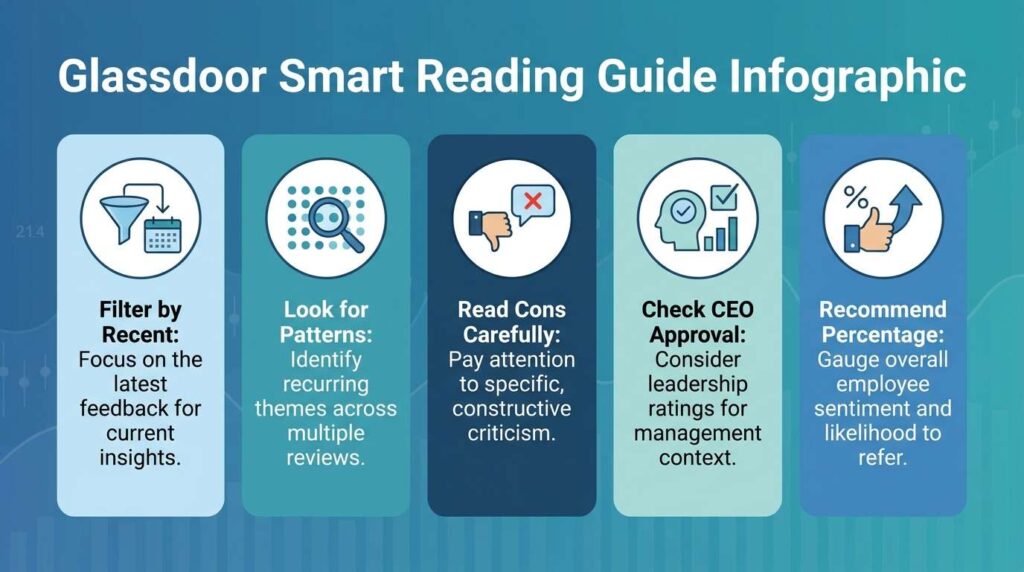
3. Read the Cons More Than the Pros
Generic pros appear in every incentivized review. The cons section is where genuine insights live. Read every cons section carefully and note what comes up repeatedly.
4. Check the CEO Approval Rating
CEO approval below 60% typically indicates leadership problems affecting the entire organization. A consistently high rating (80%+) over time is a strong positive signal.
5. Check the “Recommend to a Friend” Percentage
Below 60% is a significant red flag regardless of the overall star average.
Red Flags in Glassdoor Reviews
- Multiple reviews mentioning the same manager negatively
- Many reviews in a short period that all sound suspiciously similar
- Consistent complaints about poor communication from leadership
- Frequent mentions of high turnover or “revolving door”
Cross-Reference With Other Sources
- LinkedIn: Check average employee tenure — short tenure signals real problems
- Blind app: Often more candid reviews from verified employees
- Indeed: Second independent review platform
- Reddit: Subreddits for specific companies contain candid perspectives
Conclusion
Glassdoor is invaluable when read with critical intelligence. Never accept a star rating at face value. Read across time, look for patterns in cons, check CEO approval, and cross-reference with other sources. Twenty minutes of smart research before an interview can save years of career regret.