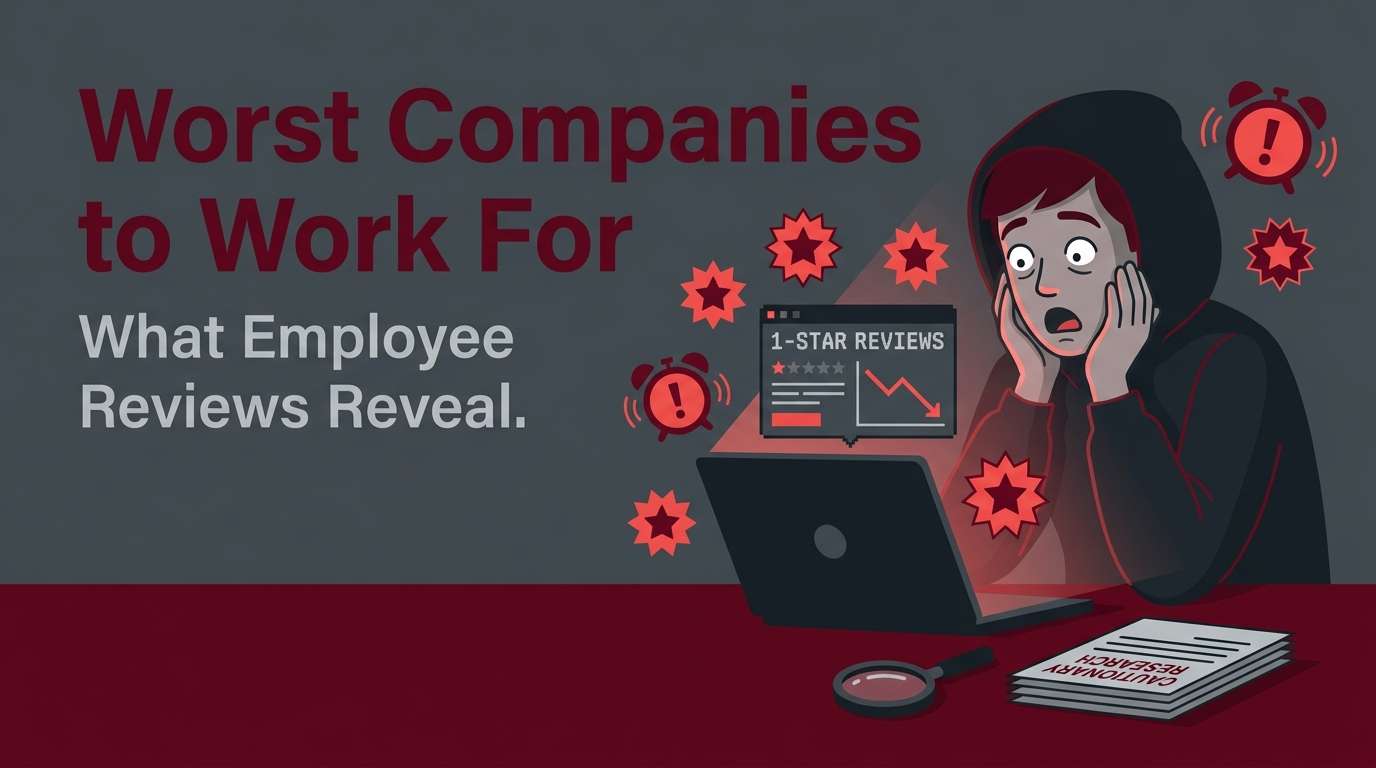
Just as important as knowing the best employers is understanding what the worst ones look like — and recognizing the patterns before you accept the offer. Employee reviews expose a consistent set of characteristics that define chronically poor workplaces.
The Common Patterns of Poorly-Rated Employers
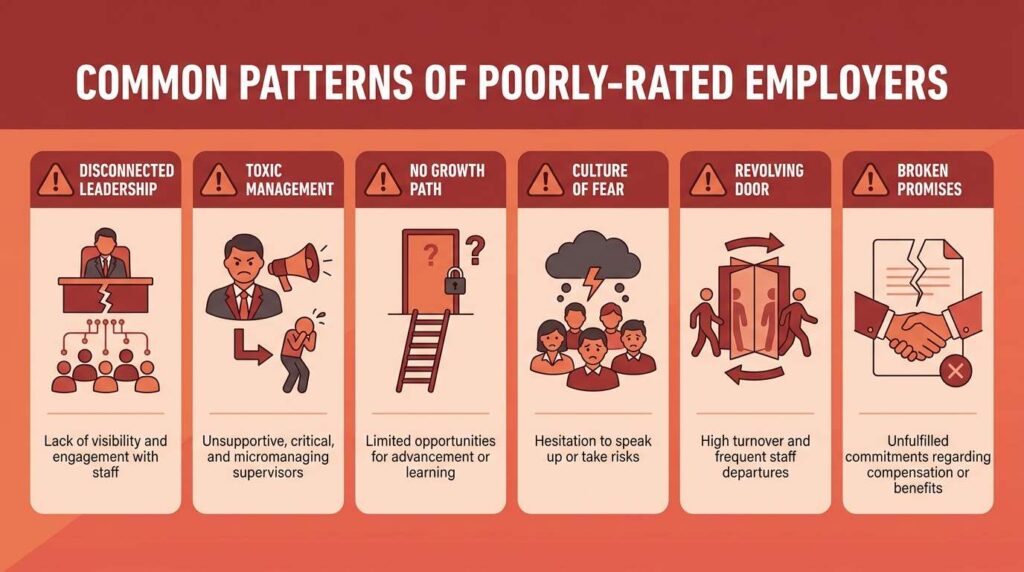
Pattern 1: Leadership Disconnected From Reality
The most common theme across consistently low-rated employers is leadership that is invisible, dishonest, or hostile to employee input. Reviews describe leaders who announce cultural values but model opposite behaviors, and who prioritize optics over substance. Review language: “leadership says one thing and does another,” “all-hands meetings are scripted performances,” “feedback goes into a black hole.”
Pattern 2: Cultures of Fear and Blame
Low-rated employers often have cultures where mistakes are punished rather than examined, and negative news is systematically suppressed until it becomes a crisis. Review language: “everyone is afraid to speak up,” “culture of blame,” “toxic positivity — negative feedback not tolerated.”
Pattern 3: Promises That Are Never Kept
A striking proportion of negative reviews describe the same experience: the hiring process oversells the role and culture — and reality does not match. Career paths that evaporate. Remote policies that are culturally punished. Salary reviews that are consistently deferred. This gap between promise and reality is one of the most corrosive trust destroyers an employer can create.
Pattern 4: Managers Promoted for the Wrong Reasons
Many of the worst day-to-day experiences come from managers promoted for technical performance without ever developing leadership skills. Reviews in poorly-rated companies frequently name management quality — not the company at large — as the primary problem.
Industries With the Most Consistently Negative Reviews
- Retail: High turnover, unpredictable scheduling, low pay
- Staffing and Recruitment Agencies: Commission-heavy, high-pressure environments
- Fast Food chains: Operational pressure, high turnover, limited progression
- Some call centers: Monitoring-heavy environments with limited autonomy
How to Protect Yourself
- Never skip review research — even for prestigious companies
- Search company name + “toxic” or “culture” on Reddit and Blind for unfiltered opinions
- Talk to real current or former employees before accepting offers
- Trust your instincts — red flags in the interview process predict red flags in the culture
Conclusion
The worst companies to work for are not always those with the worst public reputation. They are often companies with attractive brand names hiding deeply dysfunctional cultures. Do your research. The information is there, freely available, written by people who want to help you avoid the mistakes they made.