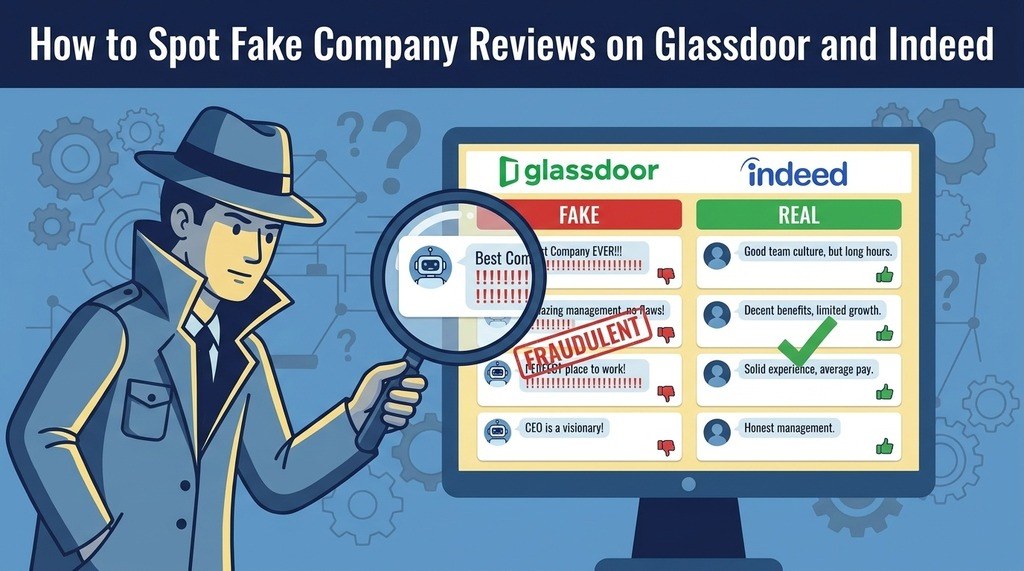
Fake company reviews are a genuine problem on every major employer review platform. Both types exist: fake positive reviews (written or incentivized by companies) and fake negative reviews (written by disgruntled ex-employees or competitors). Learning to identify them protects you from making career decisions based on manufactured data.
Why Fake Reviews Exist
Companies have a financial incentive to improve their ratings — higher Glassdoor scores attract better candidates and reduce recruitment costs. Some companies actively solicit positive reviews from employees during hiring campaigns or engage reputation management firms. On the negative side, controversial decisions can trigger coordinated negative campaigns from former employees organized through private social channels.
Signs of Fake Positive Reviews
Multiple Reviews in a Short Window
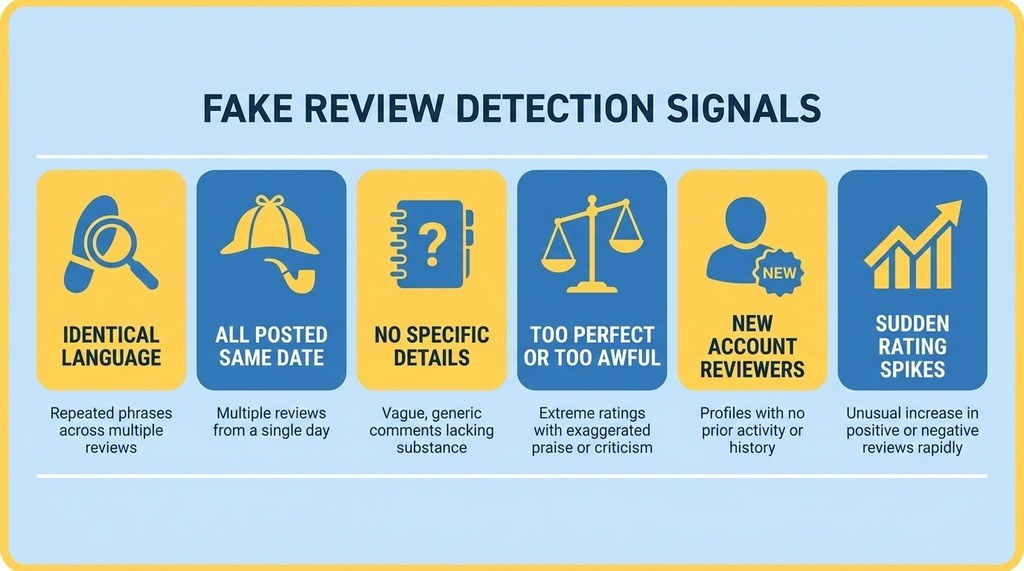
If a company receives 15 five-star reviews over two weeks (coinciding with a hiring push), this signals a coordinated internal campaign. Organic review accumulation looks scattered and gradual.
Reviews That All Sound Remarkably Similar
Fake positive reviews often come from a template. Look for identical phrases across multiple reviews, the same generic pros repeated word-for-word, and an unusual lack of specific details.
Suspiciously Perfect Overall Tone
Real workplace experiences are complex. Reviews with no meaningful cons and sound like a marketing brochure rather than a human experience are frequently manufactured.
Signs of Fake Negative Reviews
Coordinated Posting After a Major Event
A sudden spike in one-star reviews immediately following a layoff or controversial news story is often partly coordinated. Clusters of identically-timed negative reviews should prompt careful reading for fabrication signals.
Extreme, Non-Specific Accusations
Reviews claiming something extreme without specific verifiable details are less credible than reviews describing specific observable behaviors with context.
Tools for Review Verification
- Review date clustering: Sort by date and look for suspicious groupings
- Cross-platform comparison: Genuine experiences tend to reflect across multiple platforms
- LinkedIn tenure check: Average employee tenure does not lie
- Reddit and Blind: Fake review campaigns rarely extend to anonymous forums
- Direct conversation: The most fake-proof source of intelligence available
Conclusion
No review platform is perfectly immune to manipulation — but all contain significant genuine signal if read with critical intelligence. Look for patterns, not individual data points. Compare across platforms. Be skeptical of both perfection and coordinated negativity. When in doubt, talk to real people who have worked there.