The startup versus corporate debate is one of the most common career dilemmas of the modern era. Both sides have mythologies — startups promise freedom and equity; corporates promise stability and structure. Employee reviews cut through both myths to reveal what each experience actually delivers.
What Startup Reviews Actually Say
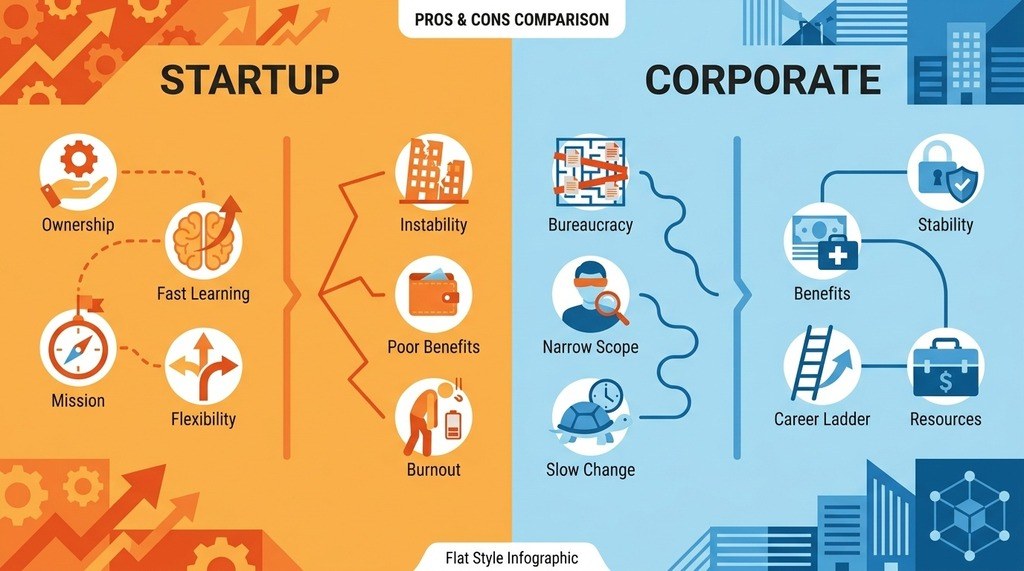
The Genuine Positives
- Scope and ownership: “I owned entire product areas that would take years to reach at a large company”
- Speed of learning: “I learned more in 18 months here than in 5 years at [large company]”
- Mission connection: “I can see exactly how my work impacts the company and customer”
- Equity upside: At the right stage with the right outcomes, equity has created significant wealth
The Genuine Negatives
- Instability: Layoffs with limited notice, funding rounds that fall through
- Poor management: “The founder is technically brilliant but has no idea how to lead people”
- Benefits gaps: Healthcare, retirement, and parental leave often significantly below corporate equivalents
- Equity that never materializes: Reviews frequently mention equity promised that never became worth anything
What Corporate Reviews Actually Say
- Stable, predictable income and clear severance processes
- World-class benefits that startups cannot match
- Structured development with dedicated L&D budgets
- Resources, budgets, and talent that startups cannot provide
- Brand credibility that opens doors
- “Three months to get a software subscription approved”
- Advancement sometimes feels more about visibility than performance
- “I managed one tiny part of one feature for two years”
- Innovative ideas often stall in approval processes
What Reviews Say About Career Stage
- Early career (0–3 years): Large companies often provide better structured development and training
- Mid career (4–8 years): Best time to try a startup — you have foundation to handle chaos with career runway to recover
- Senior career (8+ years): Either path works — choice depends on personal priorities and risk tolerance
Conclusion
Both startups and corporates have real merits and drawbacks — and reviews consistently show both honestly. The right choice depends on where you are in your career, what you value most, and how much risk you are genuinely comfortable carrying. Go in with honest self-awareness — informed by the experiences of those who went before you.