Every company claims to value work-life balance. Employee reviews reveal who actually means it. In 2026, genuine work-life balance has become one of the top deciding factors for professionals choosing employers. Here is what the review data actually shows.
What Genuine Work-Life Balance Looks Like in Reviews
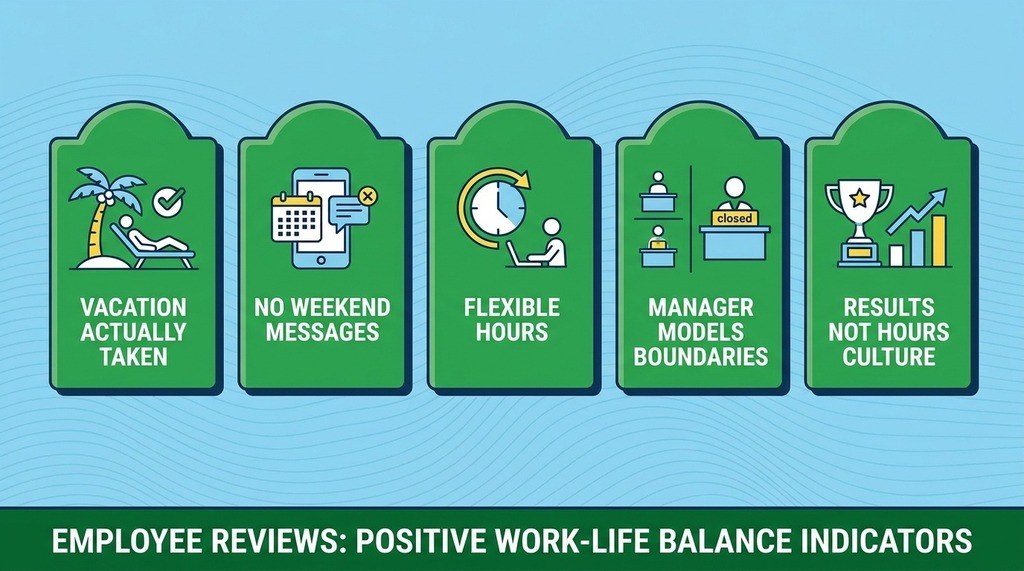
- Consistent ability to disconnect after core hours
- Vacation time that is actually taken without stigma
- Managers who model healthy boundaries themselves
- No expectation of responsiveness on evenings and weekends
- Flexible arrangements for appointments, family needs, and personal events
Top-Rated Companies for Work-Life Balance
Salesforce
Salesforce consistently ranks among the top large-company employers for balance. Reviews specifically praise the “Ohana” culture’s genuine respect for personal time, 7 “well-being” days in addition to standard vacation, and managers who actively encourage disconnection outside hours.
Adobe
Adobe reviews consistently cite above-average balance for a major tech company. The unlimited PTO policy with genuine cultural support and check-in performance management create an environment where employees are evaluated on impact rather than hours. Remote and hybrid flexibility is highly rated.
LinkedIn employees praise “InDay” — one day per month where all employees step away from regular work for personal development or rest. Reviews highlight genuine flexibility and a culture where balance is treated as enabling better work, not conflicting with it.
Unilever
Outside tech, Unilever is consistently cited as a top balance employer. The company’s four-day work week trials and flexible working initiative have directly improved review scores. Reviews praise managers who genuinely model disconnection.
Industries With the Best Average Work-Life Balance
- Federal government / Civil service: Fixed hours, predictable workloads, strong leave policies
- Education and academia: Structured schedules, long breaks, good pension
- Utility companies: Stable industries with less “always-on” culture
- Large insurance companies: Regulated, stable, predictable hours
Questions to Ask About Work-Life Balance in Interviews
- “What does a typical workday end time look like for someone in this role?”
- “Is there an expectation of responsiveness on evenings or weekends?”
- “How much of your annual vacation did you take last year?”
Conclusion
Work-life balance is not a policy — it is a culture. Companies that genuinely deliver it do so through leadership modeling and organizational structures that measure output rather than hours. Employee reviews remain the most reliable signal of the real balance you can expect to find.