Microsoft has undergone one of the most dramatic corporate culture transformations in business history. Under CEO Satya Nadella’s leadership since 2014, the company shifted from a cutthroat “stack ranking” culture to a “growth mindset” approach. In 2026, employee reviews reflect this transformation with important nuances worth understanding.
Microsoft at a Glance (2026)
- Glassdoor Rating: 4.3/5
- CEO Approval (Satya Nadella): 91%
- Recommend to a Friend: 82%
- Employees globally: ~220,000
What Microsoft Employees Consistently Praise
Cultural Transformation Under Nadella
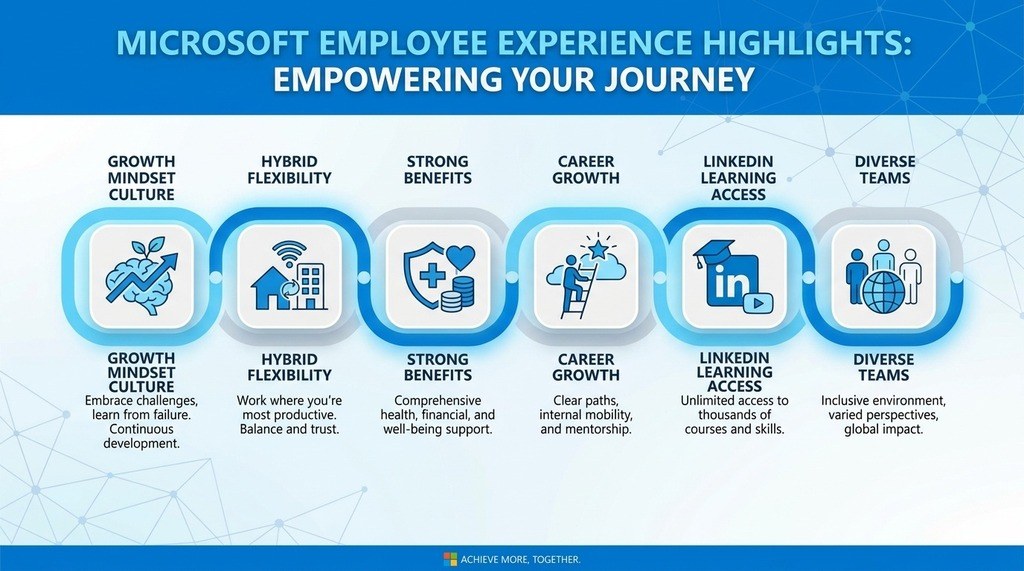
The shift from “know-it-all” to “learn-it-all” culture is mentioned across divisions and seniority levels. The “growth mindset” framework has been internalized to a degree that stands out as genuine rather than performative.
Compensation and Benefits
Competitive base salaries, significant RSU grants, industry-leading healthcare including mental health coverage, 401k matching up to 50% of contributions, generous parental leave (20 weeks primary, 12 secondary), 5 personal days separate from annual leave, and $10,000 education assistance annually.
Remote and Hybrid Flexibility
Unlike some tech peers, Microsoft has maintained genuine hybrid flexibility in 2026. Reviews consistently note that the flexibility is real and remote workers are not disadvantaged in culture or promotion. This is one of Microsoft’s most consistently praised qualities vs Amazon and Google.
LinkedIn Learning Access
As owners of LinkedIn Learning, Microsoft employees have unlimited access to one of the most comprehensive professional development libraries available. Reviews praise genuine manager encouragement to use learning time during work hours.
What Microsoft Employees Consistently Criticize
Bureaucracy in Mature Divisions
Microsoft’s newer divisions (Azure, Teams, AI/Copilot) receive more energized reviews than legacy divisions (Office, Windows). Employees in slower divisions describe significant bureaucracy and a “too many meetings” culture that differs from a startup experience.
Compensation Lag vs High-Growth Peers
While Microsoft pays well, pure-play tech companies (particularly Nvidia at senior levels) can offer higher total compensation through equity appreciation. Microsoft’s RSU grants are competitive but with lower upside potential than some high-growth competitors.
Career Growth at Microsoft
Microsoft uses explicit career levels (60 being entry-level, 67+ Principal and above). Reviews describe the system as relatively transparent — you know where you are and what the next level requires. Common criticism: the jump from Level 64 to 65 (Senior threshold) is described as more difficult and political than earlier transitions.
Conclusion
Microsoft in 2026 is a genuinely excellent employer for professionals who value collaboration, learning, stability, and genuine flexibility. The cultural transformation is real and shows in the reviews. It is consistently one of the most positive working environments at scale in the tech industry.