Your resume is your first impression — and in 2026, recruiters spend an average of just 7 seconds scanning it before deciding to read further or move on. That means your resume needs to be sharp, focused, and tailored to each job you apply for. This guide gives you everything you need to write a resume that actually gets results.
Why Most Resumes Fail
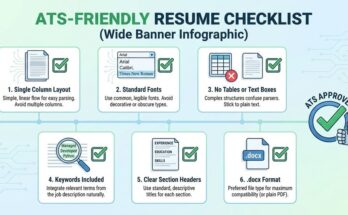
The majority of resumes are rejected before a human ever reads them. Why? Because most companies today use Applicant Tracking Systems (ATS) — software that scans resumes for keywords before passing them to a recruiter. If your resume is not optimized for ATS, it gets filtered out automatically, no matter how qualified you are.
Other common reasons resumes fail include: too much irrelevant information, poor formatting, generic summaries, and lack of measurable achievements.
Step 1: Choose the Right Resume Format
There are three main resume formats:
- Chronological: Lists work experience from most recent to oldest. Best for people with solid, consistent work history.
- Functional: Focuses on skills rather than job history. Good for career changers or those with employment gaps.
- Combination: Blends both formats. Ideal for experienced professionals moving into new roles.
For most job seekers in 2026, the chronological or combination format works best because ATS systems are designed to read them easily.
Step 2: Write a Powerful Resume Summary
Your resume summary (also called a professional profile) sits at the top and tells recruiters who you are in 2–3 sentences. It should immediately communicate your value.
Bad example: “Hardworking professional looking for a challenging position to grow my skills.”
Good example: “Results-driven Digital Marketing Manager with 6 years of experience growing brand revenue by 40%+ across B2B and B2C markets. Expertise in SEO, paid media, and content strategy.”
Step 3: Tailor Your Resume to Every Job
Sending the same resume to every job is one of the biggest mistakes you can make. Carefully read the job description and mirror the language used. If the job posting says “project management,” use those exact words — not “managing projects.”
Step 4: Quantify Your Achievements
Recruiters want to see impact, not just job duties. Replace vague statements with numbers and results:
- Instead of: “Managed a sales team” → Write: “Led a team of 8 sales reps, increasing quarterly revenue by $250,000”
- Instead of: “Improved customer service” → Write: “Reduced customer complaint rate by 32% within 6 months”
Step 5: Optimize for ATS Keywords
Go through the job description and identify key skills, tools, and qualifications. Include these naturally throughout your resume — especially in your skills section and work experience. Tools like Jobscan can help you compare your resume to a job description and find missing keywords.
Step 6: Keep Formatting Clean and Simple
ATS systems struggle to read fancy formatting. Stick to:
- Standard fonts: Arial, Calibri, or Georgia (10–12pt)
- Simple bullet points (no fancy symbols)
- No tables, text boxes, or columns (ATS cannot read these)
- Consistent date format (March 2023 or 03/2023)
- Save as .docx or PDF as instructed in the job posting
Step 7: Include the Right Sections
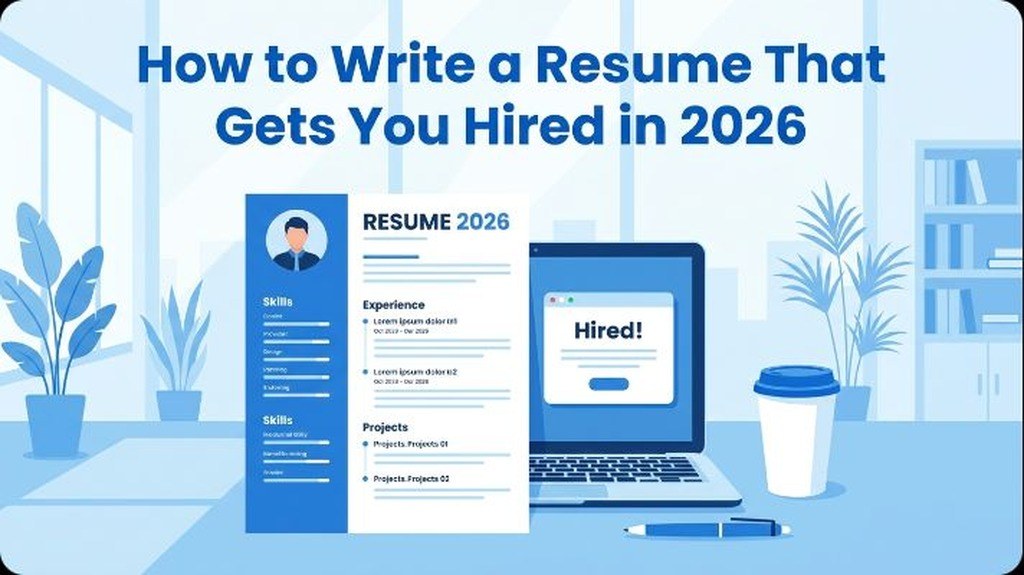
A complete resume in 2026 should include:
- Contact Information (name, city, email, LinkedIn, portfolio link)
- Professional Summary
- Core Skills / Technical Skills
- Work Experience (with bullet points and achievements)
- Education
- Certifications (if relevant)
- Optional: Projects, Volunteer Work, Languages
Final Tips for 2026
- Keep your resume to 1–2 pages maximum
- Use action verbs: Led, Built, Increased, Developed, Managed
- Proofread carefully — typos are instant rejection
- Include your LinkedIn URL (make sure your profile is updated)
- Consider adding a portfolio link if you work in a creative or technical field
Conclusion
Writing a resume that gets you hired is not about being the most qualified candidate — it is about presenting your qualifications in the clearest, most compelling way possible. Follow the steps in this guide, tailor every application, and you will dramatically increase your chances of landing interviews in 2026.