Writing a cover letter without work experience feels like trying to sell a car you have never driven. But employers hiring entry-level candidates know exactly what they are getting — someone without experience. What they are looking for is potential, attitude, and the ability to communicate. Here is how to show all three.
What an Entry-Level Cover Letter Should Accomplish
- Show you understand what the role requires
- Demonstrate relevant skills even if gained outside formal employment
- Convey genuine enthusiasm for this specific company
- Communicate clearly and professionally in writing
What to Use Instead of Work Experience
When you lack formal experience, draw from these sources:
- Academic projects relevant to the role
- Volunteer or community work
- Internships or part-time work (even unrelated — they show reliability)
- Extracurricular leadership (clubs, sports captaincy, events organized)
- Personal projects (a blog, a portfolio, an app you built, a side business)
- Coursework and self-directed learning (certifications, online courses)
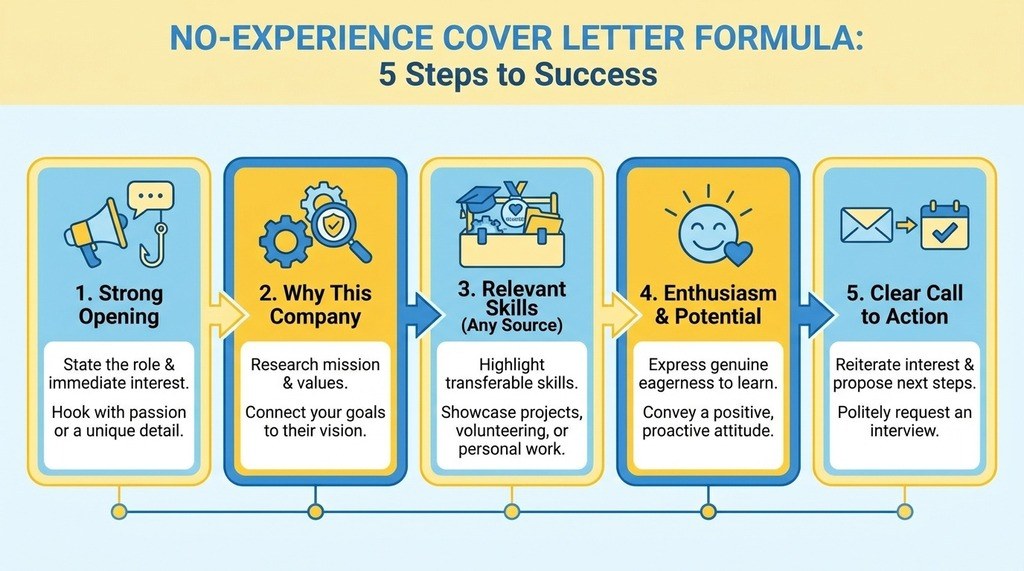
The Structure That Works
Opening: Hook Them Immediately
Do not start with “I am writing to apply for…” Lead with genuine enthusiasm or a compelling observation about the company:
“When [Company] launched its new sustainability initiative last month, I immediately recognized the kind of work I want to build my career in — purpose-driven, data-backed, and genuinely impactful.”
Middle: Your Relevant Value
Pick the most relevant thing you have done — even if it was academic — and describe it concisely in terms of skills demonstrated:
“During my final year project, I led a team of four students to design and test a mobile app concept for elderly users, conducting user interviews and building three rounds of prototypes. The project taught me research, collaboration, and the importance of keeping real user needs at the center of every design decision — skills I am eager to apply in a professional UX context.”
Closing: Clear and Confident
End without apology. You are not begging for a chance — you are expressing genuine interest from a place of confidence:
“I am excited about the opportunity to bring my enthusiasm, research skills, and fresh perspective to [Company]. I would welcome the chance to discuss how I can contribute. Thank you for your consideration.”
Common Mistakes to Avoid
- “I know I do not have much experience, but…” — Never apologize for where you are in your career
- Focusing entirely on what you want from the role, not what you can offer
- Writing the same letter for every company
- Exceeding one page
Conclusion
A no-experience cover letter is your first professional writing sample — make it count. Research the company genuinely, frame your relevant experiences clearly, and communicate with confidence. The candidates who get called back are not always the most qualified — they are the most compelling communicators.