Landing an interview is only half the battle. What happens in that room — or on that video call — determines whether you get the job. In 2026, interview formats have evolved significantly, with AI-assisted screening, behavioral assessments, and multi-round video interviews becoming the norm. This complete guide will prepare you for every stage.
Before the Interview: Research and Preparation
Research the Company Thoroughly
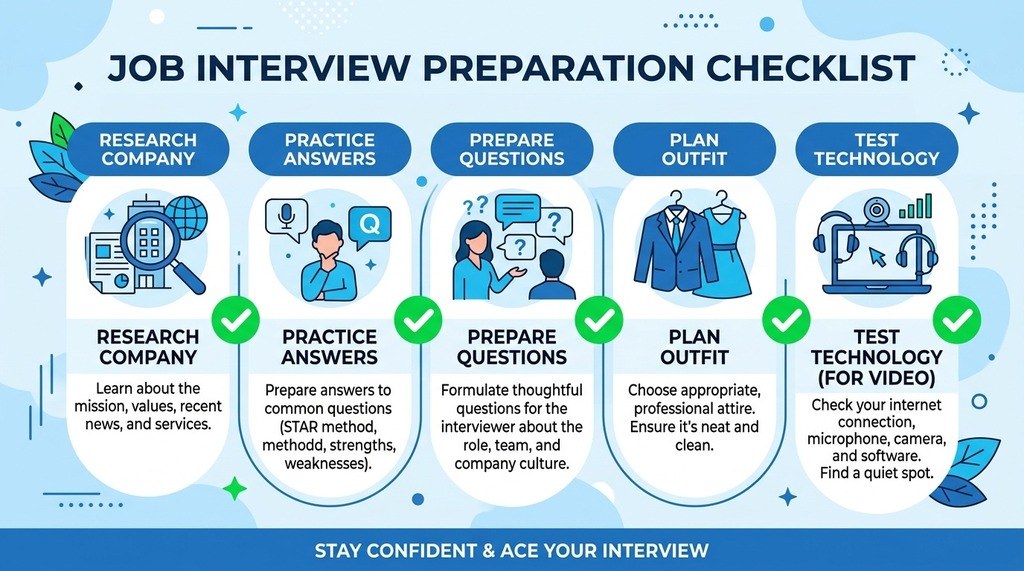
Nothing impresses an interviewer more than a candidate who clearly knows the company. Before any interview, research:
- The company’s mission, vision, and core values
- Recent news, product launches, or major announcements
- The company’s main competitors and market position
- The team you would be joining (check LinkedIn)
- Any challenges the company is facing in the industry
Understand the Job Description Inside Out
Read the job description multiple times. Identify the key skills and responsibilities being asked for and prepare examples from your own experience that demonstrate each one. This is the foundation of great interview answers.
Master the STAR Method for Behavioral Questions
Most interviewers in 2026 use behavioral questions — questions that ask about past situations to predict future performance. The most effective way to answer them is the STAR method:
- S – Situation: Set the scene. What was the context?
- T – Task: What was your responsibility in that situation?
- A – Action: What specific steps did you take?
- R – Result: What was the outcome? Use numbers where possible.
Example question: “Tell me about a time you had to meet a tight deadline.”
STAR answer: “At my previous company (S), I was tasked with delivering a client report within 48 hours instead of the usual two weeks (T). I reorganized my workload, delegated two tasks to junior staff, and worked two extended evenings (A). The report was delivered on time and the client renewed their contract worth $80,000 (R).”
Common Interview Questions and How to Answer Them
“Tell me about yourself”
This is not an invitation for your life story. Give a 60–90 second professional summary: your current role, relevant experience, and why you are excited about this opportunity.
“What is your greatest weakness?”
Choose a genuine weakness, explain what you have done to improve it, and show growth. Never say “I work too hard” — interviewers see through it instantly.
“Why do you want to work here?”
Connect your career goals with the company’s mission. Reference something specific you researched — not generic compliments about the company being “great.”
“Where do you see yourself in 5 years?”
Show ambition aligned with the role. Demonstrate that this job is a meaningful step on a career path, not just a paycheck.
Questions to Ask the Interviewer
Always prepare 3–5 thoughtful questions to ask at the end. Great options include:
- “What does success look like in this role after 90 days?”
- “What are the biggest challenges the team is currently facing?”
- “How would you describe the management style here?”
- “What opportunities exist for professional development?”
Video Interview Tips for 2026
With remote work widely normalized, many companies now conduct first and second round interviews over video. Key tips:
- Test your camera, microphone, and internet connection 30 minutes before
- Use a clean, professional background (or a virtual background if needed)
- Dress professionally from head to toe — you may need to stand up
- Look into the camera, not at your own image on screen
- Have your resume and notes nearby (but do not read from them)
Day of the Interview: Final Checklist
- Arrive 10–15 minutes early (or log in 5 minutes early for video)
- Bring multiple printed copies of your resume
- Greet everyone professionally — from receptionist to interviewer
- Turn off your phone completely
- Maintain confident body language: firm handshake, eye contact, upright posture
After the Interview: Follow Up
Send a thank-you email within 24 hours. Keep it brief, mention something specific from the conversation, and reiterate your enthusiasm for the role. This small step is something most candidates skip — and it makes a real difference.
Conclusion
Interview success comes down to preparation, confidence, and authenticity. Know the company, know your stories, and remember that interviews are a two-way conversation. You are also evaluating whether this role and company are right for you.