Leadership is not a title — it is a behavior. The most common career mistake young professionals make is waiting to be given authority before starting to act like a leader. The professionals who advance fastest are those who demonstrate leadership behaviors from their earliest roles — long before anyone calls them a manager.
What Leadership Actually Means Early in Your Career
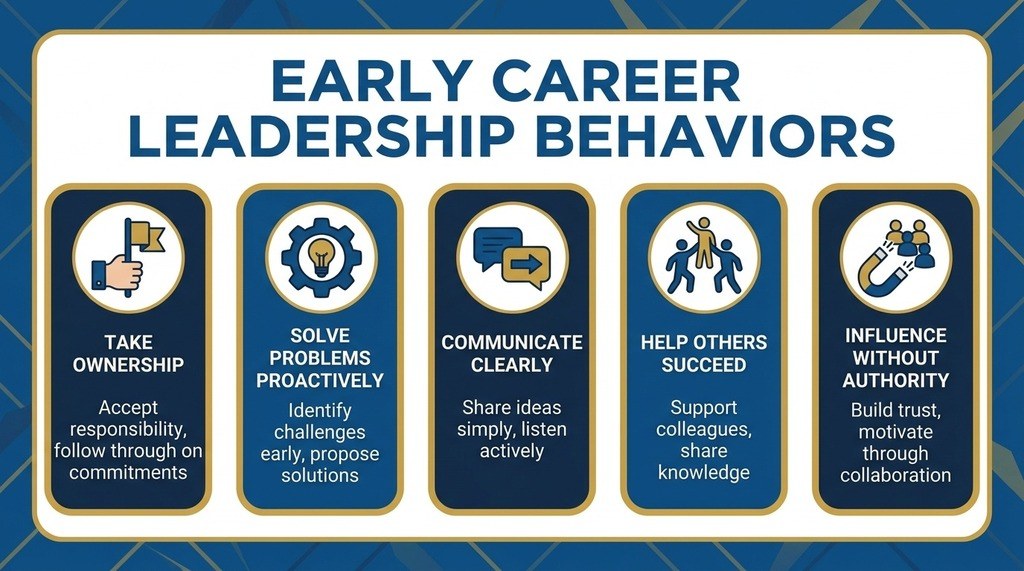
At the beginning of your career, leadership does not mean managing people. It means:
- Taking ownership of projects and outcomes rather than just tasks
- Proactively solving problems rather than waiting to be told what to do
- Communicating clearly and confidently with people at all levels
- Helping colleagues succeed, not just focusing on your own performance
- Influencing outcomes without formal authority
Strategy 1: Volunteer for Projects Beyond Your Job Description
The clearest signal of leadership potential is initiative. When there is a cross-functional project that needs someone to coordinate it, put your hand up. When there is a problem no one is solving, offer to own it. Even if these contributions are not in your formal job description, they demonstrate that you think and act beyond the boundaries of your role.
Strategy 2: Develop Others Around You
Leaders make the people around them better. Even as a junior employee, you can mentor someone more junior than yourself, share resources, and offer to help colleagues who are struggling. This generosity builds trust, relationships, and a reputation as someone others want to work with — all leadership foundations.
Strategy 3: Communicate With Senior Stakeholders
Many junior employees avoid talking to senior leadership unless required. Reverse this habit. Volunteer to present project updates to senior stakeholders, write executive summaries of your team’s work, and ask thoughtful questions in all-hands meetings. Visibility with decision-makers is essential for career progression.
Strategy 4: Seek and Apply Feedback Actively
Leaders are learners. Proactively seeking feedback — not just waiting for annual reviews — signals self-awareness and commitment to growth. After every significant project or presentation, ask your manager: “What is one thing I could have done differently to make that stronger?”
Strategy 5: Build Your Emotional Intelligence
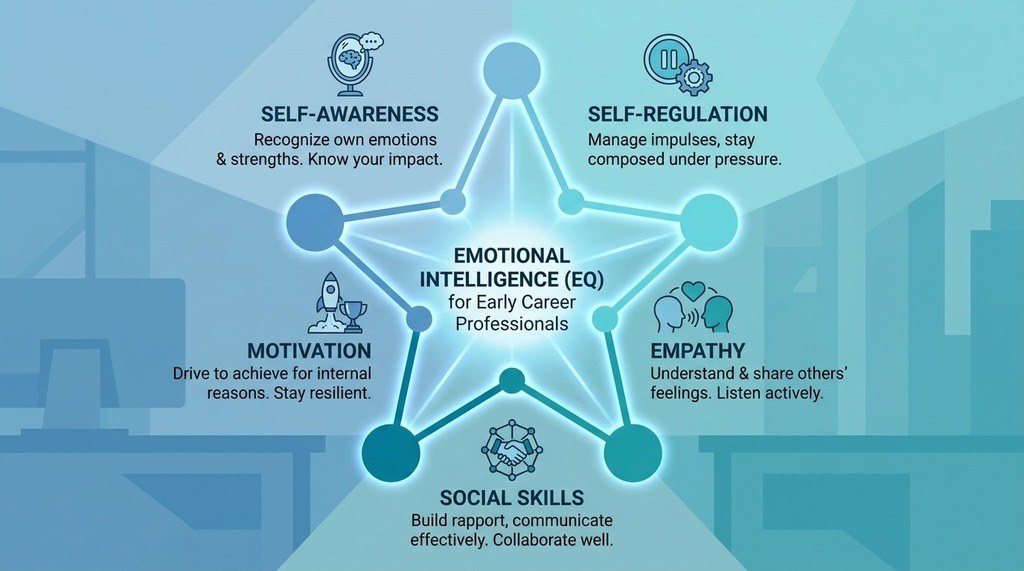
Technical skills get you the job. Emotional intelligence (EQ) determines how far you go. Practice active listening, manage your reactions under pressure, demonstrate empathy in difficult conversations, and notice how your behavior affects those around you. EQ is the defining competency of effective leaders at every level.
Formal Leadership Development Resources
- “The Leadership Challenge” by Kouzes and Posner — research-backed leadership model
- “Dare to Lead” by Brené Brown — on courageous, empathetic leadership
- Toastmasters International — public speaking and leadership practice
- Young professional associations in your industry — leadership roles in external organizations
Conclusion
Leadership potential is recognized long before leadership positions are given. The professionals who advance into management and executive roles are almost always those who were already demonstrating leadership behaviors years earlier. Start now — even in small ways. Every initiative taken, every colleague helped, every clear communication delivered is building the leader your career needs you to become.