
Finance is often perceived as a closed club requiring specific pedigree — economics or finance degrees from target universities. While that remains true for the most elite entry points (bulge-bracket investment banking, top hedge funds), the broader finance industry is far more accessible. Here is how to break into financial services without a traditional finance degree.
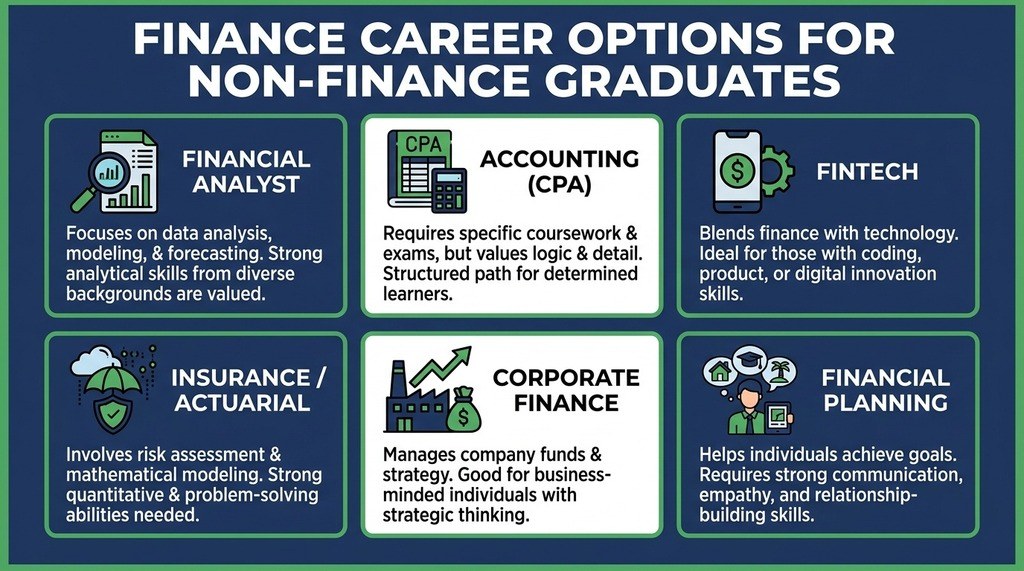
Finance Roles Open to Non-Finance Graduates
- Financial Analyst: Data-focused roles that value analytical thinking from any quantitative background
- Accounting / Management Accounting: Accessible through professional qualifications (CPA, ACCA, CIMA)
- Insurance: Actuarial and underwriting roles accessible from mathematics, statistics, or engineering
- Fintech: Tech-forward finance companies hiring data scientists, developers, and product managers
- Corporate Finance: In-house finance roles at non-finance companies less pedigree-focused than investment banks
- Personal Financial Planning: Client-facing financial advisory roles accessible through CFP certification
Professional Certifications That Open Finance Doors
CFA (Chartered Financial Analyst)
The CFA is the most globally respected investment credential. It requires passing three rigorous exams over multiple years — but it explicitly opens doors that a non-finance degree cannot. Many CFA charterholders come from engineering, science, or mathematics backgrounds.
CPA / ACCA / CIMA
For accounting paths, professional qualifications from these bodies are the standard entry point regardless of undergraduate degree. Many accounting firms actively recruit non-accounting graduates and put them through qualification programs.
CFP (Certified Financial Planner)
For financial planning and wealth management roles, the CFP designation is the entry credential. It is accessible to candidates from any background through structured coursework and exams.
Transferable Skills From Other Degrees
Finance values certain skills regardless of educational background:
- Mathematics / Statistics: Directly applicable to risk, actuarial, and quantitative finance
- Engineering: Structured problem-solving and quantitative thinking are highly valued
- Law: Valuable for financial regulation, compliance, and deal-related roles
- Psychology / Behavioral Science: Increasingly valued in financial advisory and fintech
- Computer Science: Essential in fintech, algorithmic trading, and financial systems
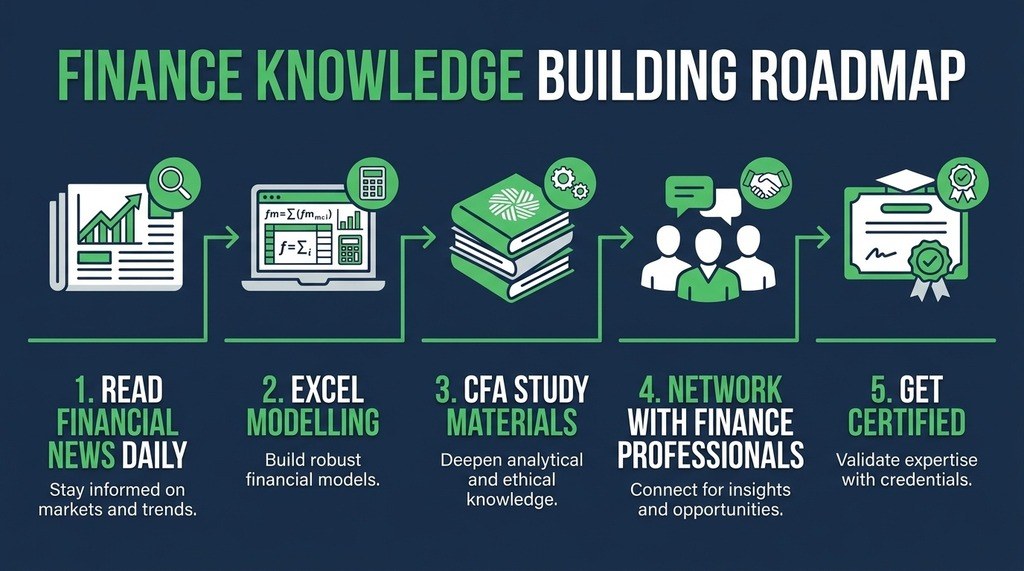
How to Build Finance Knowledge From Scratch
- Read the Financial Times, Wall Street Journal, and Bloomberg regularly
- Complete CFA Level 1 exam preparation (even without sitting the exam, the curriculum is excellent)
- Take financial modelling courses from Breaking Into Wall Street or Wall Street Prep
- Build Excel and data analysis skills to professional proficiency
- Network with finance professionals through CFA Society events and LinkedIn
Conclusion
The finance industry is not as closed as its reputation suggests. With the right professional certifications, quantitative skills, and genuine market knowledge, candidates from any educational background can build successful finance careers. The investment in credentials like CFA or CPA signals the kind of commitment that finance employers respect.