Difficult coworkers are one of the top reasons people leave jobs. Whether you are dealing with a credit-stealer, a chronic complainer, an aggressive personality, or a passive-aggressive colleague — how you handle it professionally will define your reputation and your sanity.
Common Types of Difficult Coworkers
- The Credit Thief — Takes ownership of others’ ideas and work
- The Gossip — Constantly spreads rumors and creates drama
- The Bully — Uses intimidation, sarcasm, or aggression
- The Passive-Aggressive — Expresses disagreement through indirect behavior
- The Chronic Underperformer — Creates extra work for others
- The Micromanager — Controls every detail and suffocates autonomy
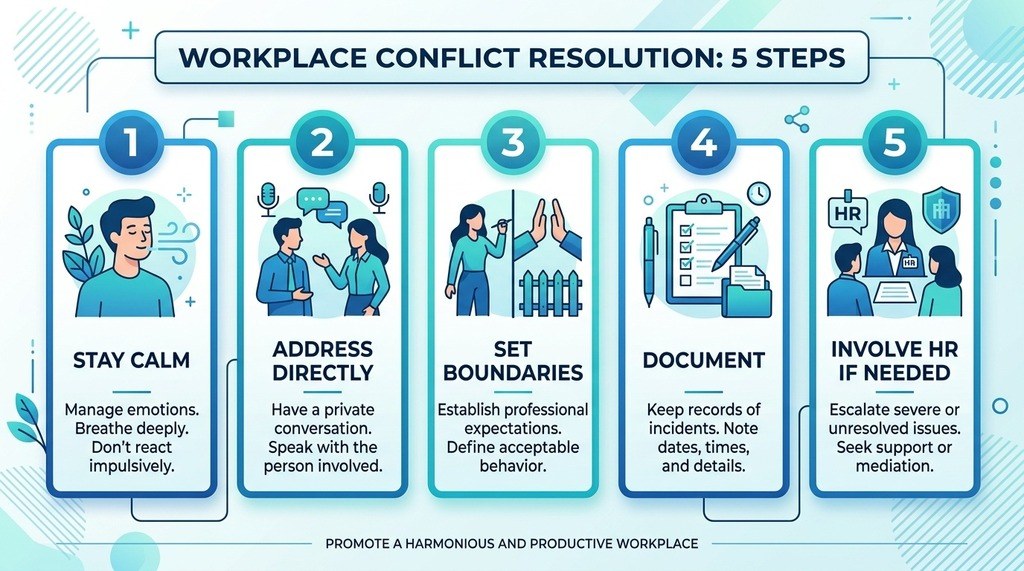
Step 1: Stay Professional — Always
The single most important rule when dealing with difficult coworkers: never match their energy. The moment you respond emotionally, unprofessionally, or aggressively, you become part of the problem and damage your own reputation. Stay calm, composed, and measured at all times.
Step 2: Address the Issue Directly and Privately
Many workplace conflicts are resolved by simply naming the issue calmly in a private conversation. Most difficult people are unaware of their impact. Use “I” statements to avoid triggering defensiveness:
“When you interrupt me in meetings, I find it hard to contribute my ideas fully. I wanted to mention it directly because I think we can work better together.”
Step 3: Set Clear Professional Boundaries
Once you have named the issue, hold the boundary consistently. If a colleague speaks to you disrespectfully, calmly state: “I am happy to discuss this, but not when we are both frustrated. Let us revisit it this afternoon.” Then follow through.
Step 4: Document Problematic Behavior
If behavior persists or escalates, document specific incidents with dates, times, and what was said or done. This creates a factual record if you ever need to involve your manager or HR — and it prevents the pattern being dismissed as a “personality clash.”
Step 5: Know When to Involve Leadership or HR
If a situation involves bullying, harassment, discrimination, or affects your ability to do your job — involve your manager or HR. This is not “tattling.” It is appropriate professional escalation. Go in with your documentation and specific examples, not emotional complaints.
What to Do When the Difficult Person Is Your Boss
A difficult manager requires an even more careful approach. Try to understand their priorities and fears — often difficult management behavior stems from their own pressure. Focus on delivering results that make them look good. If the behavior crosses into harassment or abuse, HR is always an appropriate recourse.
Conclusion
You cannot choose your colleagues, but you can choose how you respond to them. Staying professional under pressure is one of the most valuable career skills you can develop — and the people who do it well are always noticed by leadership.