Studies suggest that up to 55% of communication is nonverbal. In a job interview, what you say matters — but how you carry yourself, make eye contact, and control your nervous energy can be equally decisive. Here is what experienced recruiters actually notice and how to make your nonverbal communication work for you.
The First 10 Seconds
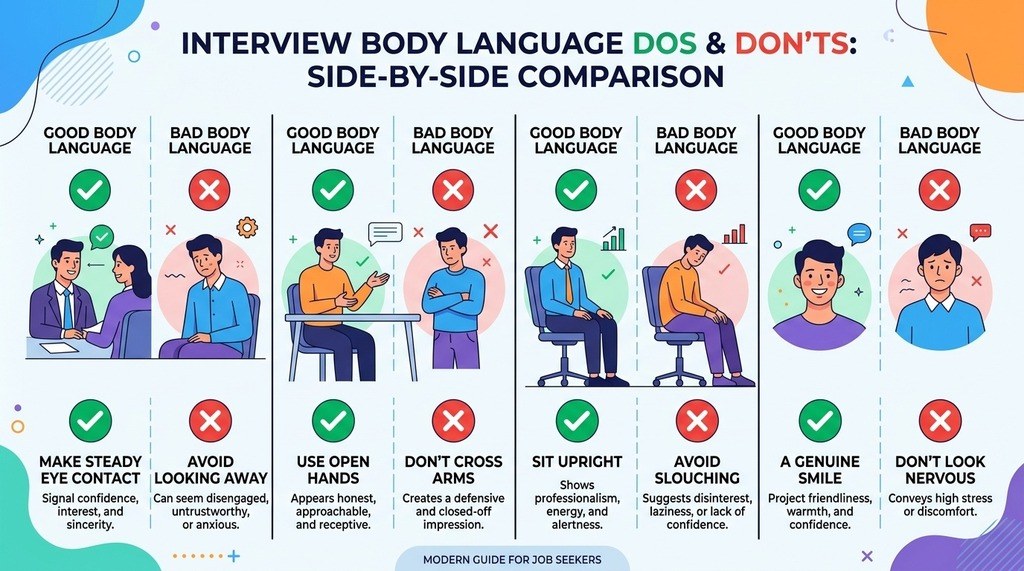
Interviews often begin in the first 10 seconds before a word is spoken. The way you walk in, your greeting, your handshake, and your expression all create an immediate impression. Walk in purposefully, make eye contact, smile genuinely, and give a firm (not crushing) handshake.
Posture: The Confidence Signal
Sitting upright with your back straight signals confidence, engagement, and energy. Slouching suggests disinterest or low confidence. Lean slightly forward to show engagement, but do not lunge toward the interviewer.
Eye Contact: The Trust Builder
Appropriate eye contact signals honesty and confidence. Aim for 60–70% eye contact during conversations — too little suggests nervousness or dishonesty, too much becomes uncomfortable. In panel interviews, address the person who asked the question, but include others with brief glances.
Hand Gestures: Use Them to Your Advantage
Natural, open hand gestures emphasize your points and communicate enthusiasm. Keep them below shoulder level and within your “power zone” (between the waist and shoulders). Avoid covering your mouth, pointing, or excessive fidgeting.
Nervous Habits to Eliminate
- Tapping feet or fingers — signals impatience or anxiety
- Touching your face, hair, or neck — associated with uncertainty
- Crossing arms tightly — appears defensive and closed
- Looking at the clock or door — suggests you want to leave
- Rapid blinking — associated with stress and dishonesty
Smile: Authentic, Not Forced
A genuine smile (involving the eyes as well as the mouth) is one of the most powerful rapport-builders in any interaction. Do not force a permanent smile throughout the interview — it reads as anxious. Smile naturally when greeting, when sharing achievements, and when the conversation allows.
Video Interview Body Language
On video calls, body language signals are amplified because the camera crops everything. Specific tips:
- Look into the camera — not at their face on screen
- Sit at a distance that shows your upper body, not just your face
- Keep your background clean and professional
- Nod occasionally to show you are actively listening
- Avoid checking other screens during the call
Conclusion
Mastering interview body language is not about performing — it is about channeling your genuine confidence and enthusiasm into your physical presence. Practice in front of a mirror or record yourself. What you project nonverbally is just as important as what you say.