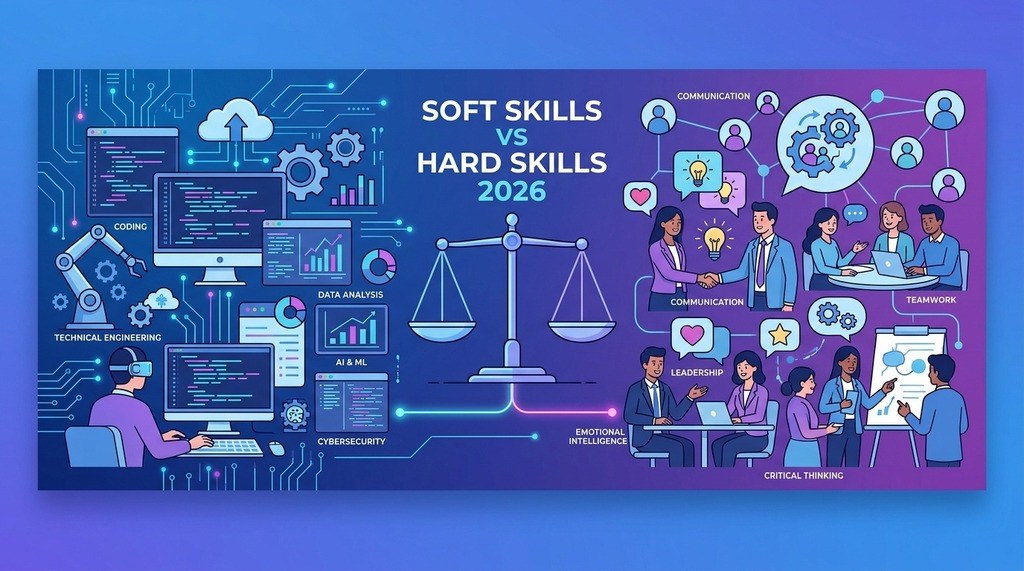
The debate between soft skills and hard skills has been ongoing for decades — but the hiring landscape of 2026 has made one thing clear: you need both, and knowing which to prioritize at which stage of your career makes all the difference.
What Are Hard Skills?
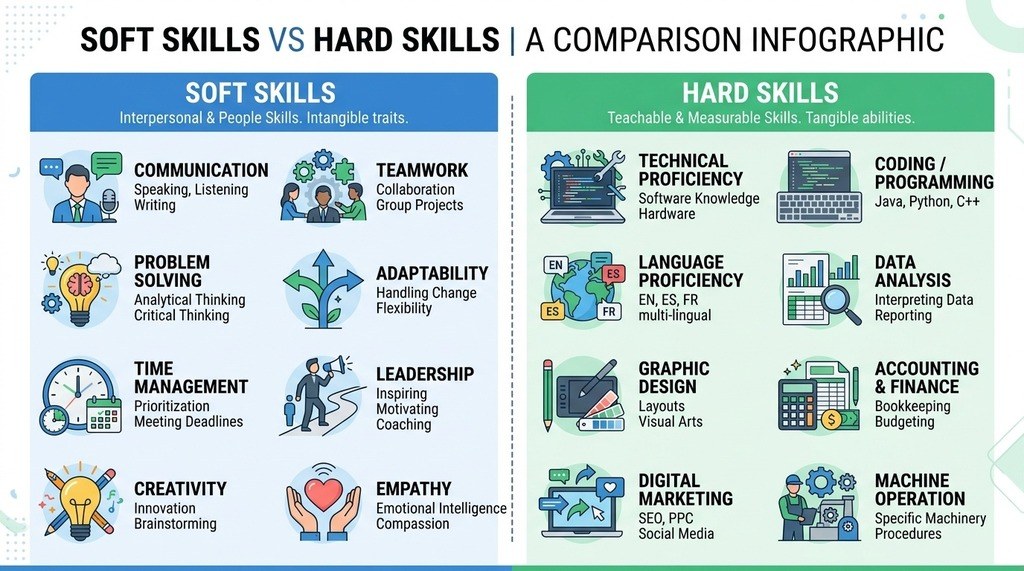
Hard skills are technical, measurable, and specific to a role. Examples include: Python programming, financial modelling, Adobe Photoshop proficiency, SEO optimization, data analysis in SQL, or AWS cloud architecture. These skills can be taught, tested, and certified.
What Are Soft Skills?
Soft skills are interpersonal, behavioral, and largely transferable across all roles and industries. Examples include: communication, leadership, adaptability, emotional intelligence, critical thinking, and conflict resolution. These are harder to measure but enormously valued.
What Does the Research Say in 2026?
Multiple major employer surveys in 2025–2026 consistently show that while hard skills get your resume noticed, soft skills determine whether you get hired — and whether you advance. LinkedIn’s Global Talent Report identified communication, adaptability, and critical thinking as the three most sought-after qualities globally, across all industries.
Why Soft Skills Matter More as You Advance
Early in your career, technical skills dominate. A junior developer is hired primarily for coding ability. But as you move into senior and leadership roles, soft skills become increasingly decisive. A CTO who cannot communicate, inspire, and influence is ineffective regardless of their technical depth.
The Hard Skills That Are Most In-Demand in 2026
- AI and machine learning
- Data analysis and visualization
- Cloud computing (AWS, Azure, GCP)
- Cybersecurity
- UX/UI design
- Digital marketing and SEO
- Financial modelling and analysis
The Soft Skills That Are Most In-Demand in 2026
- Communication (written and verbal)
- Emotional intelligence
- Adaptability and learning agility
- Critical thinking and problem solving
- Leadership and team management
- Collaboration across diverse, remote teams
How to Develop Soft Skills
Unlike hard skills, soft skills develop through practice and intentional reflection. Seek feedback regularly, volunteer for leadership roles, practice difficult conversations, and observe how effective communicators operate in your organization.
Conclusion
The winning formula in 2026 is a strong technical foundation combined with well-developed interpersonal and leadership skills. Invest in both sides of the equation — and keep investing throughout your career. The professionals who do rise fastest and furthest.