Working abroad can be one of the most transformative career experiences of your life — exposure to different cultures, markets, and ways of working accelerates professional growth in ways that are hard to achieve staying in one country. But navigating an international job search requires a strategic approach. Here is your complete guide.
Step 1: Research Your Target Countries
Not all countries are equally accessible for international workers. Research:
- Work visa requirements and availability for your nationality
- Demand for your profession in that country
- Average salaries and cost of living
- Language requirements (some roles require local language)
- Employer attitudes toward international hires
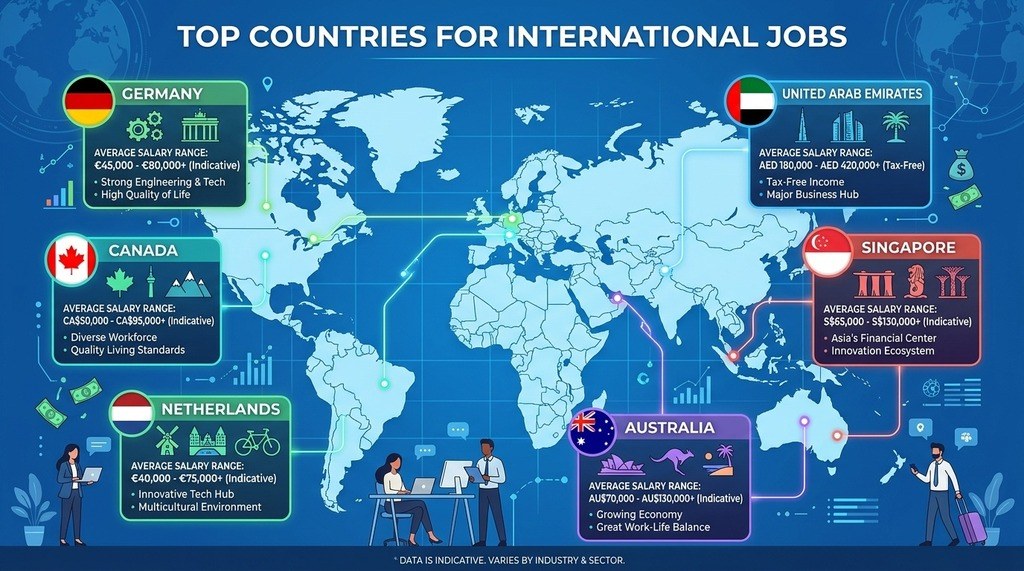
Best Countries for International Professionals in 2026
- Germany — Strong demand for engineers, IT, and healthcare professionals. English-friendly in major cities.
- Canada — Active immigration programs like Express Entry specifically target skilled workers.
- UAE (Dubai) — High salaries, zero income tax, and thriving expat professional community.
- Singapore — Asia’s financial and tech hub with strong employment protections.
- Australia — Skilled worker visa programs with high quality of life.
- Netherlands — Strong English-language work environment, great tech and international business hub.
Step 2: Adapt Your Resume to the Target Country
Resume formats vary significantly by country:
- USA/Canada: No photo, no age, no marital status — keep it professional and achievement-focused
- Germany/Europe: Photos are often expected, include a professional Lebenslauf (CV)
- UK: Called a “CV,” typically 2 pages, no photo
- Middle East: Photos common, full contact details expected
Step 3: Use International Job Platforms
- LinkedIn — Filter by country; connect with international recruiters
- EuroJobs.com — European job listings
- Jobstreet — Southeast Asia
- Bayt.com — Middle East and North Africa
- Seek.com.au — Australia and New Zealand
- Indeed (country-specific versions) — indeed.co.uk, indeed.de, etc.
Step 4: Understand Visa and Work Authorization
Working without proper authorization in any country is a serious legal risk. Research visa options early — the process can take months. Options typically include:
- Employer-sponsored work visas
- Skilled worker visa programs (Express Entry, EU Blue Card, etc.)
- Working holiday visas (available for young adults in many countries)
- Intracompany transfers (if your current employer has international offices)
Step 5: Build an International Network
Connect on LinkedIn with professionals in your target country and industry. Join expatriate communities and professional associations. Many international opportunities are found through connections, not job boards.
Conclusion
Getting a job abroad requires patience, research, and strategic action — but the payoff in career growth, financial opportunity, and life experience can be extraordinary. Start researching now, build your international network, and take the leap when the right opportunity appears.