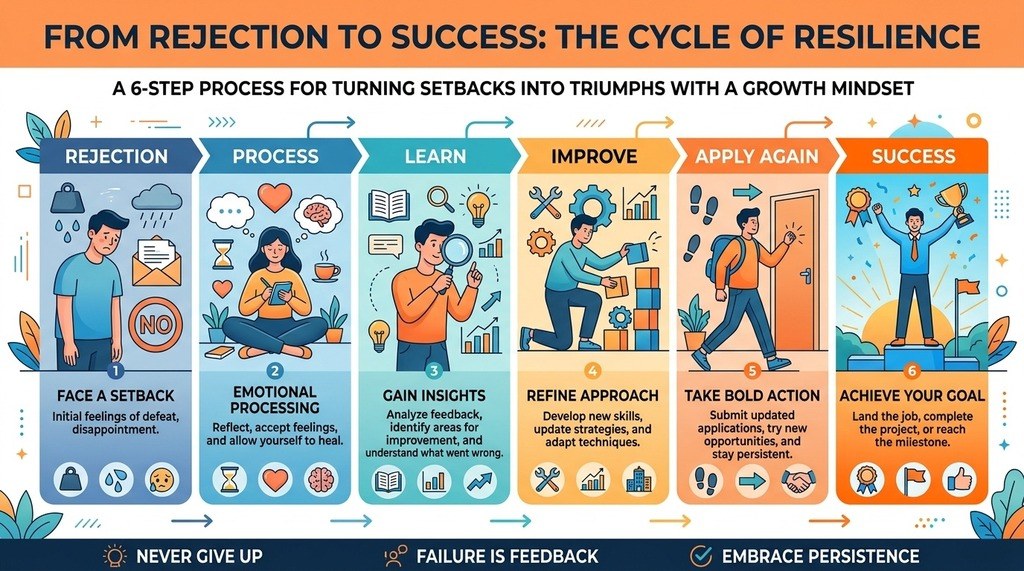
Job rejection is universal. The most successful professionals in the world have faced rejection — often many times. What separates those who ultimately succeed is not the absence of rejection, but how they process and respond to it. Here is how to handle rejection professionally, protect your mental health, and keep moving forward effectively.
Allow Yourself to Feel It (Briefly)
Rejection genuinely hurts — especially for roles you were excited about. Do not suppress or immediately rationalize those feelings. Give yourself 24 hours to be disappointed. Then redirect your energy forward. Suppressing normal emotional responses just delays the processing and erodes long-term resilience.
Separate Your Worth From the Decision
A job rejection is not a verdict on your value as a person or professional. Hiring decisions involve dozens of factors you have no visibility into — internal candidates, budget changes, team chemistry, timing, or a more specialized requirement that emerged after you applied. Many rejections have nothing to do with your qualifications.
Ask for Feedback (But Do Not Expect It)
After a final-round rejection, it is entirely professional to ask for brief feedback: “Thank you for letting me know. If you are able to share any feedback on my candidacy that I could use in future applications, I would genuinely appreciate it.” Some employers will share useful insights. Many will not — and that is okay.
Analyze What You Can Control
Not all rejections are learning opportunities — sometimes you were qualified and it just did not work out. But ask yourself honestly: Could my resume be stronger? Was my interview preparation thorough? Did I research the company deeply enough? Use rejection as data, not devastation.
Maintain Your Pipeline
The most effective antidote to rejection is activity. The more applications you have in motion, the less any single rejection stings. If you only applied to one company, rejection feels catastrophic. If you have ten applications active, it is one closed door among many open ones.
Protect Your Mental Health During a Long Job Search
- Set structured job search hours (not all day, every day)
- Celebrate process wins: applications sent, interviews booked, connections made
- Maintain exercise, sleep, and social connection
- Talk to someone — a trusted friend, mentor, or professional counselor
- Remember that most successful people faced significant rejection before their breakthrough
Conclusion
Rejection is not the opposite of success — it is part of the path to it. The job market is competitive, and landing the right role takes time, resilience, and consistent effort. Keep going. The right opportunity exists. You just have not found it yet.