Diversity and inclusion (D&I) have moved from corporate buzzword to business imperative. In 2026, companies with strong D&I practices are measurably outperforming their peers. Understanding this landscape — whether you belong to a minority group, work in HR, or simply want to thrive in modern workplaces — is essential career knowledge.
The Business Case for Diversity
Research from McKinsey, Harvard Business Review, and numerous other institutions consistently shows that diverse teams make better decisions, innovate more effectively, and generate stronger financial returns. Companies in the top quartile for ethnic and gender diversity are 35% more likely to outperform their industry peers.
What D&I Actually Means in Practice
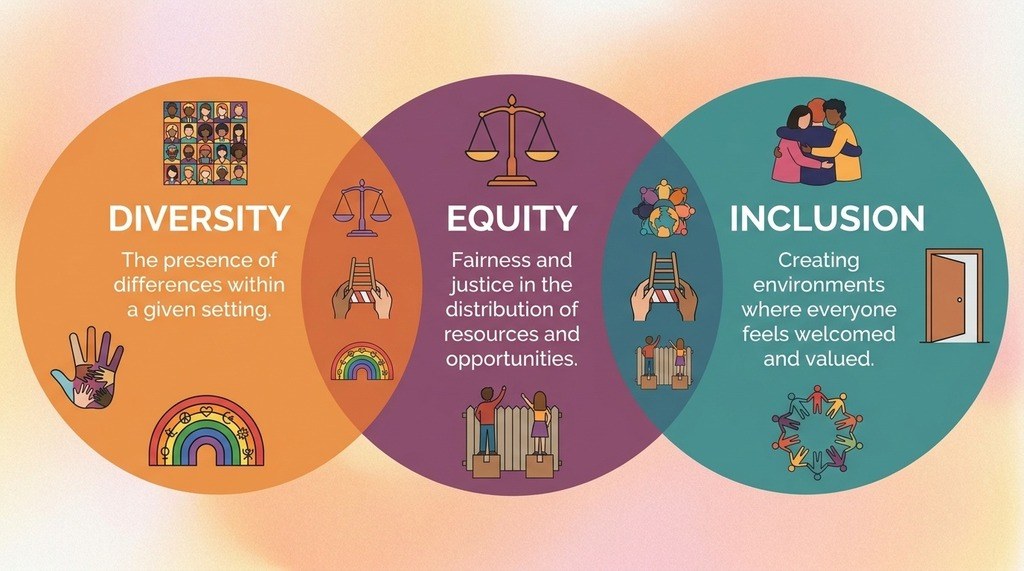
- Diversity: The presence of different backgrounds, identities, experiences, and perspectives within a team or organization
- Inclusion: Creating an environment where diverse individuals feel genuinely welcomed, heard, and empowered to contribute fully
- Equity: Ensuring fair treatment, access, and opportunities — addressing systemic barriers that disadvantage certain groups
How to Evaluate a Company’s D&I Practices
Before accepting a job offer, evaluate the company’s genuine commitment to inclusion:
- What is the diversity of their leadership team and board?
- Do they publish transparent diversity reports?
- What employee resource groups (ERGs) exist?
- What do Glassdoor reviews from diverse employees say?
- How do they respond to questions about D&I in interviews?
D&I as a Career Skill
The ability to work effectively across cultures, perspectives, and backgrounds is an increasingly valued leadership competency. Professionals who demonstrate cultural intelligence, inclusive communication, and the ability to build diverse teams are advancing faster in many organizations.
If You Experience Discrimination at Work
Discrimination based on race, gender, age, disability, religion, or sexual orientation is illegal in most countries. Know your rights:
- Document incidents with dates and details
- Report formally to HR using official channels
- Seek external legal advice if internal reporting is ineffective
- Connect with employee advocacy organizations in your industry or region
Conclusion
D&I is not just a political or social issue — it is a professional and business reality. Inclusive workplaces attract better talent, perform better, and provide better careers for everyone. Seek them out, contribute to them, and build the intercultural skills that make you a stronger professional in a global workforce.