Research consistently shows that professionals with mentors advance faster, earn more, and report higher career satisfaction. Yet most people never formally seek mentorship. This guide shows you how to find the right mentor, build the relationship professionally, and get the maximum value from it.
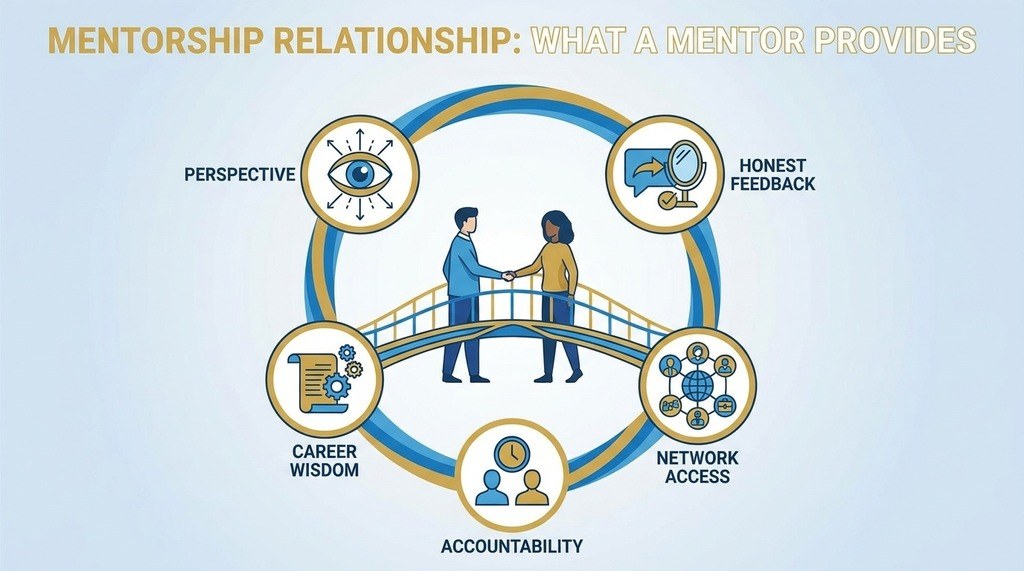
What a Good Mentor Can Do For You
- Share perspective from further along the career path you are on
- Provide honest feedback that colleagues may be reluctant to give
- Open doors through introductions and sponsorship
- Help you avoid costly career mistakes they made themselves
- Build your confidence at pivotal decision points
What a Mentor Is NOT
A mentor is not a therapist, a job placement service, or someone you contact only when you need something. Great mentorship is a genuine professional relationship built on mutual respect and value — not extraction.
How to Find the Right Mentor
The best mentors are usually people who are 5–15 years ahead of you on the path you want to take. Look for:
- Senior professionals in your industry you admire
- Former managers who know your work and believe in you
- Speakers, authors, or thought leaders in your field
- Professionals in your network’s network (second connections on LinkedIn)
How to Ask Someone to Be Your Mentor
Do not cold-message someone with “will you be my mentor?” — it is too broad and creates an undefined commitment. Instead, ask for one specific conversation: “I am navigating a career transition from [X to Y] and have followed your work closely. I would be grateful for 30 minutes of your advice. Would you be open to a brief call?”
Start with one meeting. Build trust and value from there. Formal mentorship often emerges naturally from repeated valuable conversations.
Making the Most of Every Mentorship Meeting
- Come with a clear, specific agenda for each meeting
- Do the work between sessions — follow through on every commitment
- Share updates on progress (mentors love seeing their advice in action)
- Always ask: “What is the one thing I should focus on right now?”
- Find ways to add value back — share relevant articles, make introductions
Also Consider Being a Mentor
Once you have 3–5 years of experience, consider offering mentorship to someone earlier in their career. Teaching accelerates your own learning and builds your leadership reputation. Mentorship given is one of the highest-value professional contributions you can make.
Conclusion
Finding the right mentor could be one of the most career-defining decisions you ever make. Be proactive, be specific, and be genuinely invested in the relationship. The returns — in career growth, network access, and confidence — are profound and lasting.