Investment banking is one of the most coveted and competitive career paths in finance — and one of the most misunderstood. The hours are brutal, the pressure is immense, and the process of getting in is deliberately difficult. But for those who succeed, the financial rewards and career optionality are exceptional. Here is an honest, complete guide.
What Investment Bankers Actually Do
Investment bankers help companies and governments raise money and execute large financial transactions:
- M&A Advisory: Advising on mergers, acquisitions, and divestitures
- Capital Raising: IPOs, secondary offerings, bond issuances
- Restructuring: Helping distressed companies reorganize debt
- Financial Modelling: Building complex valuation and transaction models
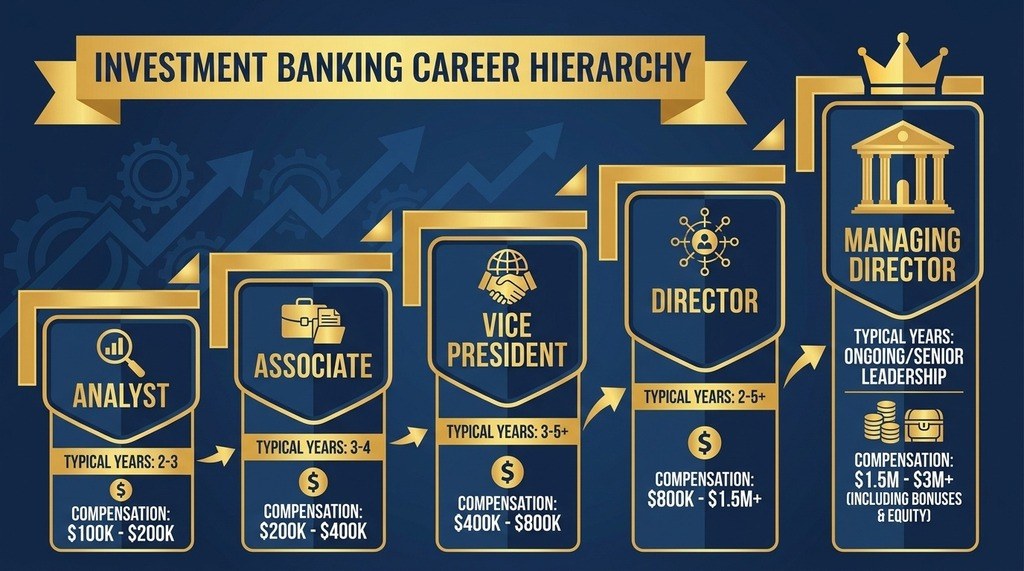
Analysts (entry-level) and associates primarily do financial modelling, research, and client presentation preparation. The work is intellectually demanding and notoriously long-hours (80–100 hours per week at some firms).
The Recruitment Pathway
The Traditional Route (On-Cycle)
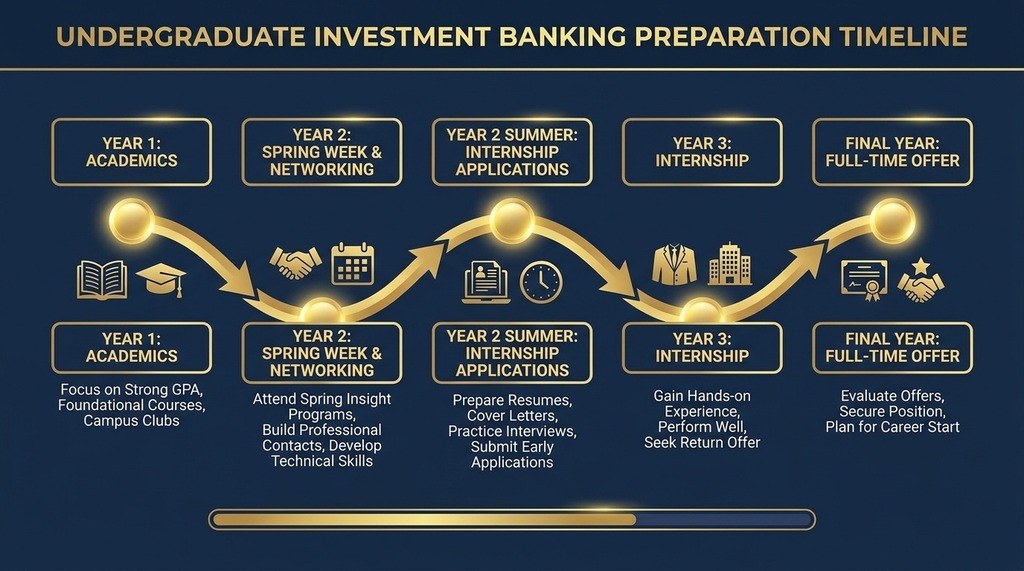
Top banks recruit heavily from target universities (Oxbridge, LSE, Ivy League, top European business schools). The timeline has moved extremely early — many banks now interview and offer internships to second-year undergraduates before they have completed half their degree.
The Non-Target Route (Off-Cycle)
Candidates from non-target universities can still break in — but it requires significantly more networking, more preparation, and often an intermediate step through boutique firms, advisory practices, or adjacent finance roles.
What You Need to Get In
- Strong academic record: Finance, economics, mathematics, or engineering degrees are most common
- Financial modelling skills: Excel proficiency, DCF, LBO, comparable analysis
- Networking: Coffee chats with analysts, associates, and VPs are crucial at target firms
- Industry knowledge: Read the Financial Times, Wall Street Journal, and deal news daily
- Interview preparation: Technical questions (valuation, accounting, deal structures) + behavioral (motivational fit, leadership stories)
Essential Resources for IB Preparation
- Breaking Into Wall Street (BIWS) — The most widely used financial modelling courses
- Investment Banking by Rosenbaum and Pearl — The definitive technical preparation book
- Mergers and Inquisitions (M&I) — Free articles and guides covering every aspect of IB recruiting
- Wall Street Prep — Financial modelling courses used at top banks
Internship Is the Only Door
The vast majority of full-time investment banking analyst offers come from summer internship conversion. Breaking in directly to a full-time analyst role without an internship is extremely rare at bulge-bracket firms. Secure the summer internship — that is where all recruiting energy should be focused.
Conclusion
Investment banking is one of the most demanding paths to break into and sustain — but it offers extraordinary financial rewards and exits into private equity, hedge funds, corporate finance, and entrepreneurship. If the lifestyle fits your ambitions, start preparing early, network relentlessly, and build your technical skills to an elite standard. The process rewards those who start preparing before everyone else.