Confidence is one of the most powerful career accelerants available — and unlike IQ or natural talent, it is genuinely buildable. In fact, the research on confidence suggests that it is largely a skill, not a fixed personality trait. Here is how to develop it deliberately.
Understanding Confidence vs Competence
Many people wait until they feel fully competent before acting confidently. But the relationship often works the other way: action builds competence, and competence builds confidence. Waiting to feel ready before starting something new is one of the most common confidence traps professionals fall into.
Strategy 1: Build a Wins Archive
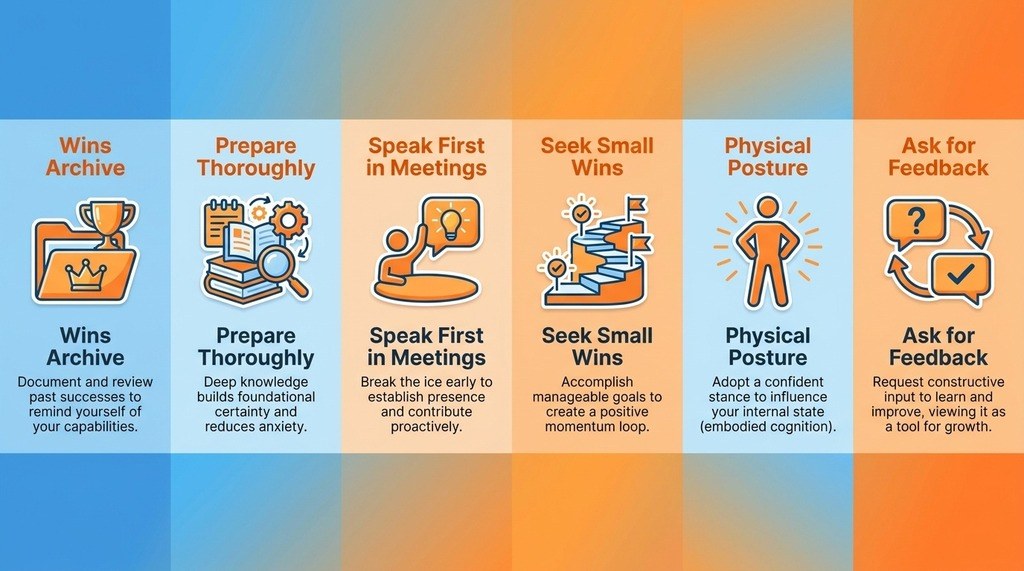
Imposter syndrome is fueled by selective memory — we remember every mistake clearly and forget our successes. Keep a running document of your wins: positive feedback, problems solved, goals achieved. Review it regularly, especially before high-stakes situations. Confidence is often simply accurate recall of past success.
Strategy 2: Prepare More Than Anyone Else
Nothing builds situational confidence like thorough preparation. Before a presentation, an interview, a difficult conversation, or a client meeting — prepare more than you think is necessary. When you know the material cold, confidence follows naturally. Most nervousness in professional situations is inadequate preparation, not a character flaw.
Strategy 3: Speak First in Meetings
Research shows that speaking up early in a meeting (even briefly) significantly reduces anxiety and increases subsequent contribution. Make a simple, relevant comment or question in the first five minutes. Your brain’s threat response decreases once you have spoken, making everything that follows easier.
Strategy 4: Reframe Failure as Feedback
Confidence erodes when we treat mistakes as evidence of inadequacy. The most confident professionals are not those who make the fewest mistakes — they are those who recover fastest and learn most from them. Adopt a growth mindset: every failure tells you something specific about what to do differently next time.
Strategy 5: Use Your Body
Research by Amy Cuddy and others shows that physical posture influences mental state. Before high-stakes professional moments, stand up straight, take slow deep breaths, and hold an expansive posture for two minutes. This is not performance — it genuinely shifts hormone levels and mental state toward confidence.
Strategy 6: Stop Waiting for Permission
Many professionals — particularly women and early-career individuals — wait to be invited to contribute, promoted, or given responsibility. Confidence is often built by claiming space proactively: volunteering for projects, proposing ideas, and making decisions within your area of expertise without waiting to be asked.

Conclusion
Confidence is not something some people have and others lack. It is built through action, preparation, and deliberate practice over time. Start with small steps — speak up once in the next meeting, document one win this week, prepare a little more thoroughly for the next presentation. Confidence compounds exactly the way any other skill does.