Remote work promised freedom — but for millions of workers it has delivered something unexpected: a new and particularly insidious form of burnout. Without physical boundaries between work and home, many remote professionals find themselves working longer, resting less, and gradually losing the energy and passion they once brought to their work. Here is how to recognize remote work burnout and recover from it.
Why Remote Work Burnout Is Different
Traditional office burnout has a clear trigger: the office environment and commute act as a daily on/off switch. Remote burnout is subtler because the boundaries are blurred or entirely absent. Work seeps into evenings and weekends. There is no commute to decompress. Isolation compounds exhaustion. And the always-available expectation of digital communication makes genuine rest feel impossible.
Signs of Remote Work Burnout
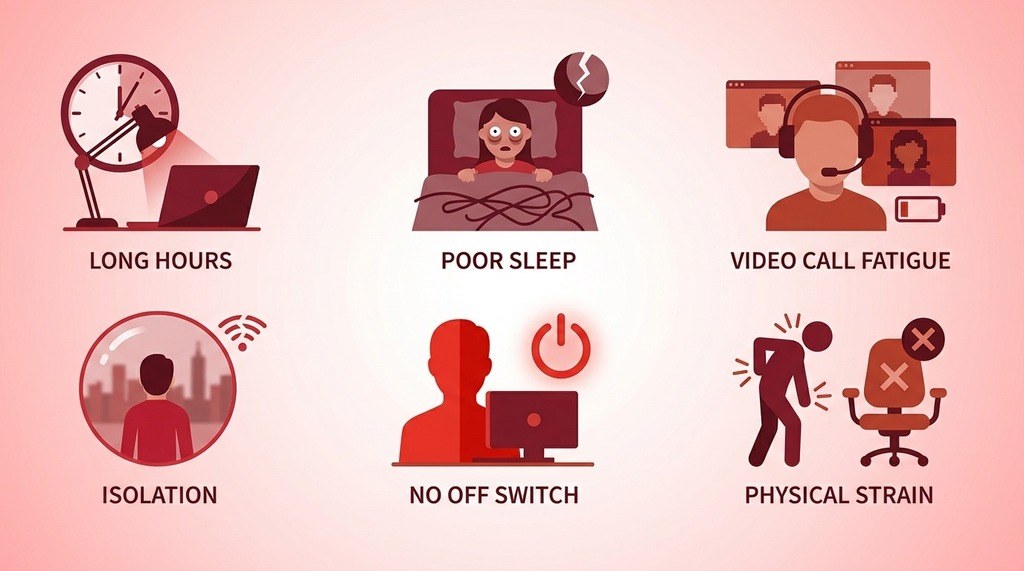
- Working longer hours than you did in office — but feeling less productive
- Difficulty mentally “switching off” at the end of the workday
- Feeling isolated, disconnected, or invisible to your team
- Video call fatigue — dreading every meeting on your calendar
- Physical symptoms: eye strain, back pain, poor sleep from screen overexposure
- Loss of interest in hobbies or social activities outside work
- Checking Slack or email first thing in the morning and last thing at night
Recovery Strategy: Create Physical and Temporal Boundaries
The most important recovery tool is recreating the boundaries that the office provided automatically:
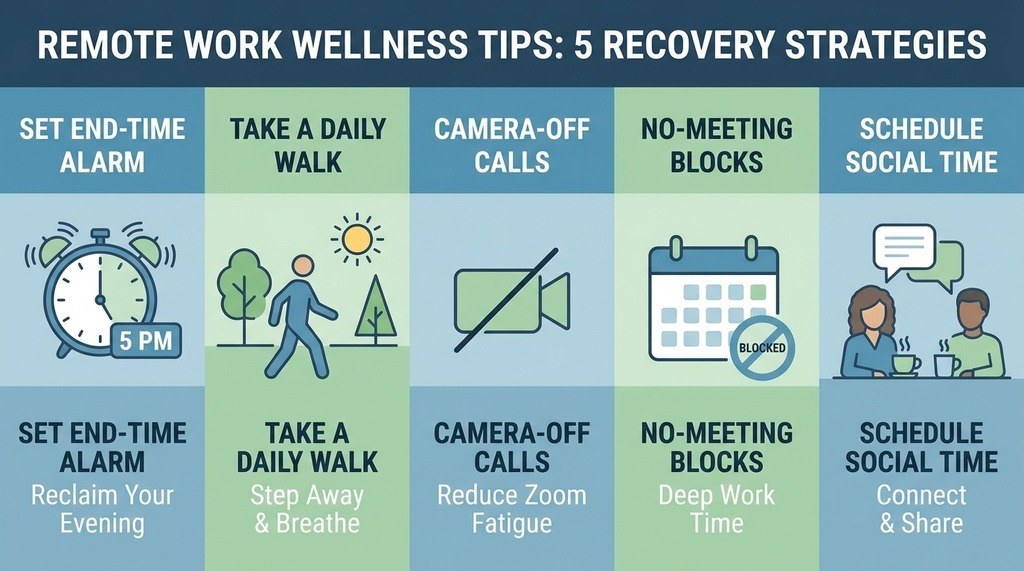
- Hard stop time: Set an alarm for when work ends — and shut the laptop at that time
- Physical shutdown ritual: Close your workspace physically at the end of the day (close the office door, put away the laptop)
- A “commute” replacement: A 15-minute walk before and after work hours tricks your brain into transitioning
- No-work rooms: Keep at least one room in your home completely work-free (the bedroom, the living room)
Addressing Isolation and Disconnection
- Schedule regular virtual coffee chats with colleagues — non-work conversation matters
- Work from a cafe or coworking space occasionally to break the isolation
- Join professional online communities in your field
- Protect in-person social activities outside work hours as non-negotiable
Managing Video Call Fatigue
- Block “no-meeting” blocks of deep work time in your calendar
- Switch some meetings to audio-only calls (camera off reduces exhaustion significantly)
- Build 5–10 minute buffers between video calls
- Advocate for async communication where synchronous meetings are not strictly necessary
When to Talk to Your Employer
If remote work burnout is affecting your performance, have an honest conversation with your manager. Most forward-thinking companies in 2026 take remote well-being seriously. Options to raise: reduced meeting load, flexible hours, additional mental health support through EAP, or a temporary return to office for social connection.
Conclusion
Remote work is an extraordinary opportunity — but it requires intentional structure that office environments provided automatically. Building clear boundaries, protecting recovery time, and maintaining social connection are not optional luxuries for remote workers — they are the foundation of sustainable high performance.