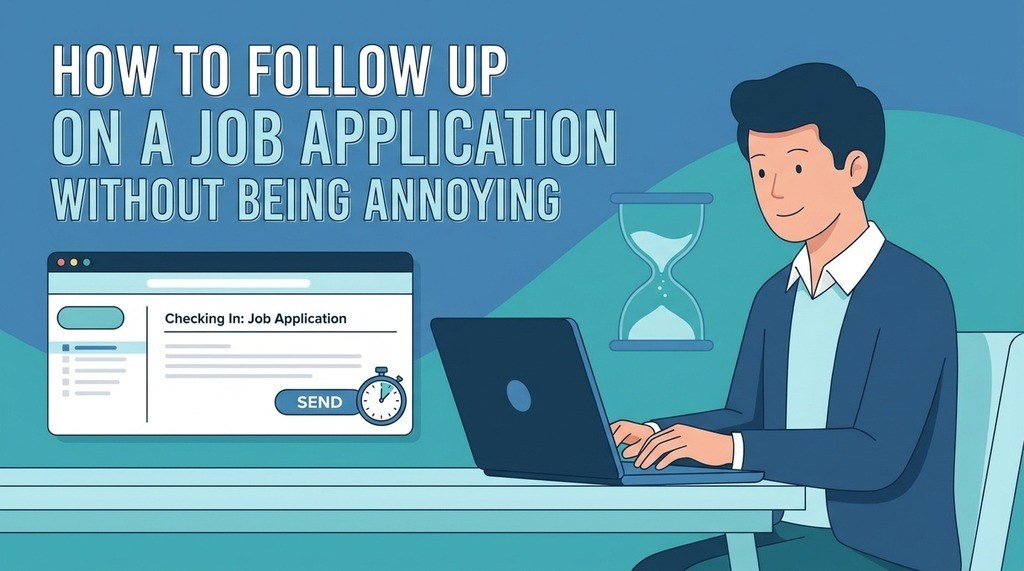
You submitted a strong application, and now you are waiting — in silence. Following up is absolutely appropriate, but how you do it makes all the difference between seeming professionally persistent and coming across as desperate or pushy. Here is the right way to follow up at every stage.
How Long to Wait Before Following Up
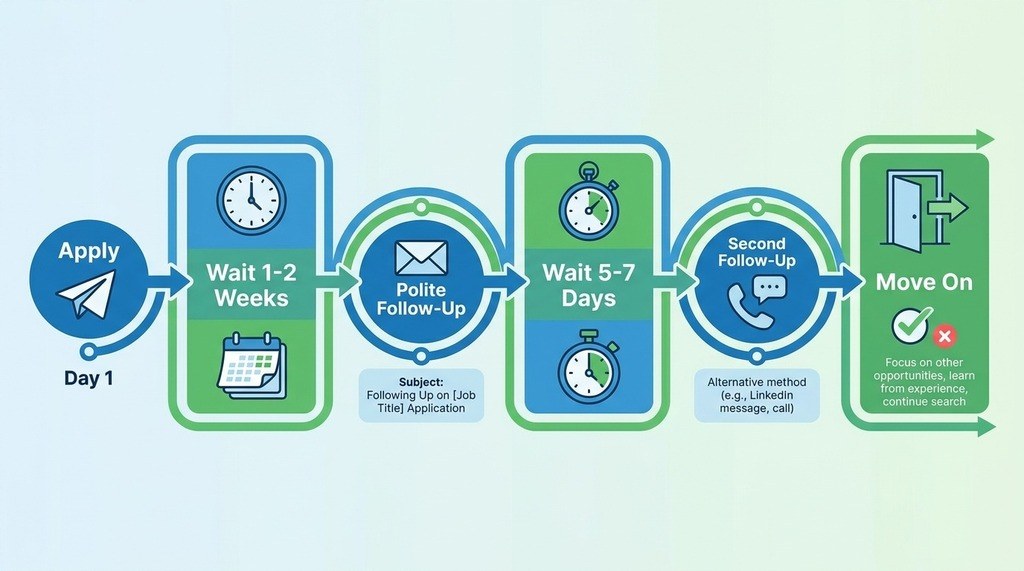
- After submitting an application: Wait 1–2 weeks before any follow-up
- After a phone screen: If no timeline was given, follow up after 5–7 business days
- After a final interview: Send a thank-you within 24 hours; follow up on the hiring decision after the timeline they gave (or 5–7 days if none given)
The Right Way to Follow Up After Applying
If you know the hiring manager’s name, find them on LinkedIn and send a connection request with a brief note. Or, if you have their email (sometimes findable on the company website), send a short, professional message:
“Hi [Name], I recently applied for the [Position] role and wanted to express my continued enthusiasm for the opportunity. I believe my experience in [specific skill] aligns strongly with what you are looking for. I would be glad to answer any questions or provide additional information. Thank you for your consideration.”
What to Say in a Follow-Up Email
Effective follow-ups are:
- Short — three to four sentences maximum
- Positive — restate genuine interest, do not express frustration about the wait
- Value-adding — if possible, mention something new (a relevant article, a recent achievement)
- Clear — one specific ask: a timeline update or next steps
How Many Times Should You Follow Up?
One to two follow-ups is appropriate. Three or more begins to feel like pressure and can damage your candidacy. If you have sent two professional follow-ups with no response, assume the role has been filled or the company is not moving forward — and redirect your energy to other applications.
Following Up on LinkedIn vs Email
LinkedIn follow-ups are often more effective for cold outreach because they feel less intrusive than email. A brief, professional LinkedIn message to the recruiter or hiring manager often gets responses that email does not. Keep it equally brief and professional.
When Not to Follow Up
- If the job posting says “no phone calls” — respect this fully
- Within 48 hours of an interview — too soon and reads as impatient
- More than twice at any stage without a response
Conclusion
Following up demonstrates genuine interest and professional initiative — two qualities employers value. Do it once, do it professionally, and do it at the right time. Then focus forward: the best antidote to waiting is applying consistently to other roles in parallel.