The classic catch-22: you need experience to get a job, but you need a job to get experience. If you are a recent graduate or career starter feeling stuck in this loop, you are not alone — and there is a way out. Here is your practical guide to landing your first real job.
What Employers Actually Look For in Entry-Level Candidates
Without work experience, employers focus on:
- Relevant coursework and academic projects
- Internships, volunteer work, and part-time jobs
- Transferable skills (communication, organization, teamwork)
- Cultural fit and attitude — enthusiasm and willingness to learn
- Certifications and self-directed learning
Build Experience Before You Apply
Internships
Even unpaid or short internships provide real experience, references, and often lead directly to job offers. Many companies hire a significant percentage of their entry-level staff from intern alumni.
Freelance Projects
Do work for friends, nonprofits, or small businesses — even for free initially. A designer who built three real websites has more credibility than one with only school projects.
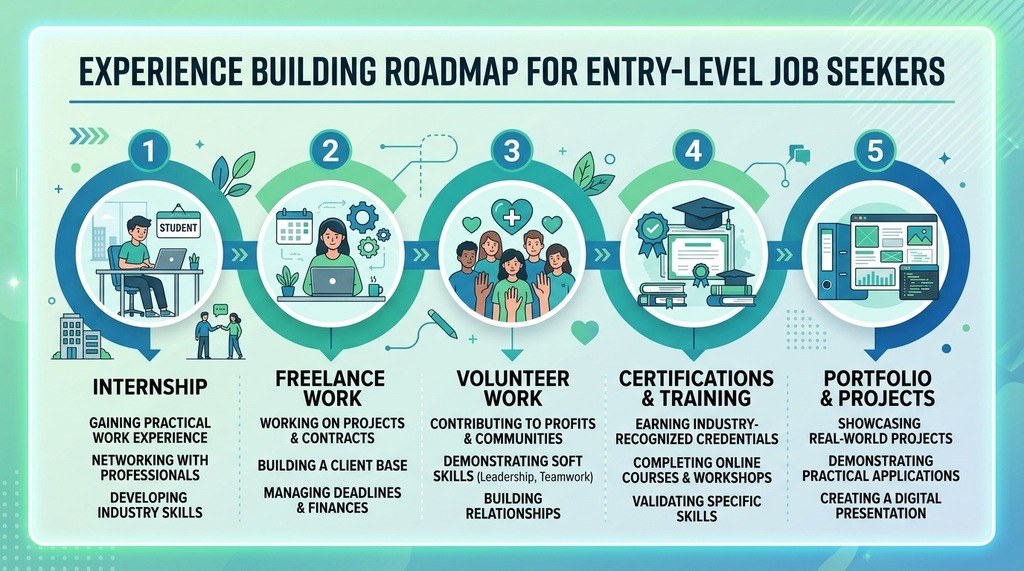
Open Source and Personal Projects
For tech and creative roles, personal projects are often more impressive than grades. Build an app, write a blog, create a portfolio, contribute to open source — demonstrate what you can do.
How to Write a Resume With No Experience
- Lead with a strong summary focused on your skills and career goals
- Include academic projects with real results
- List relevant coursework and certifications
- Include any part-time work, even unrelated — shows reliability
- Add volunteer work and extracurricular leadership
Best Entry Level Jobs by Industry (2026)
- Tech: Junior Developer, QA Tester, IT Support, Data Entry Analyst
- Marketing: Social Media Assistant, Content Writer, SEO Analyst
- Finance: Accounts Assistant, Financial Analyst Trainee, Bank Teller
- Healthcare: Medical Receptionist, Healthcare Administrator, CNA
- Sales: SDR (Sales Development Rep), Account Executive Trainee
How to Ace Entry-Level Interviews
When you lack experience, your interview answers should lead with enthusiasm, learning agility, and potential. Prepare stories from school projects, sports teams, volunteer work, or part-time jobs that demonstrate key skills like problem-solving, teamwork, and initiative.
Conclusion
Everyone starts at zero. The difference between those who land entry-level jobs quickly and those who struggle is not talent — it is strategy. Build experience proactively, optimize your application, and interview with confidence. Your career starts with the first “yes.”