Phone interviews are typically the first hurdle in any hiring process — a 20–30 minute screening call designed to filter candidates before the “real” interviews. Many candidates treat them casually. That is a costly mistake. A poor phone interview ends your candidacy before it has truly begun. Here is how to treat it with the seriousness it deserves.
Why Phone Interviews Catch Candidates Off Guard
Unlike in-person or video interviews, phone interviews remove body language entirely. You cannot use eye contact, posture, or a firm handshake to build rapport. Everything rides on your voice: tone, pace, clarity, energy, and the quality of your answers. Many candidates sound flat, unprepared, or distracted — simply because they did not treat the call like a real interview.
Before the Call: Preparation Checklist
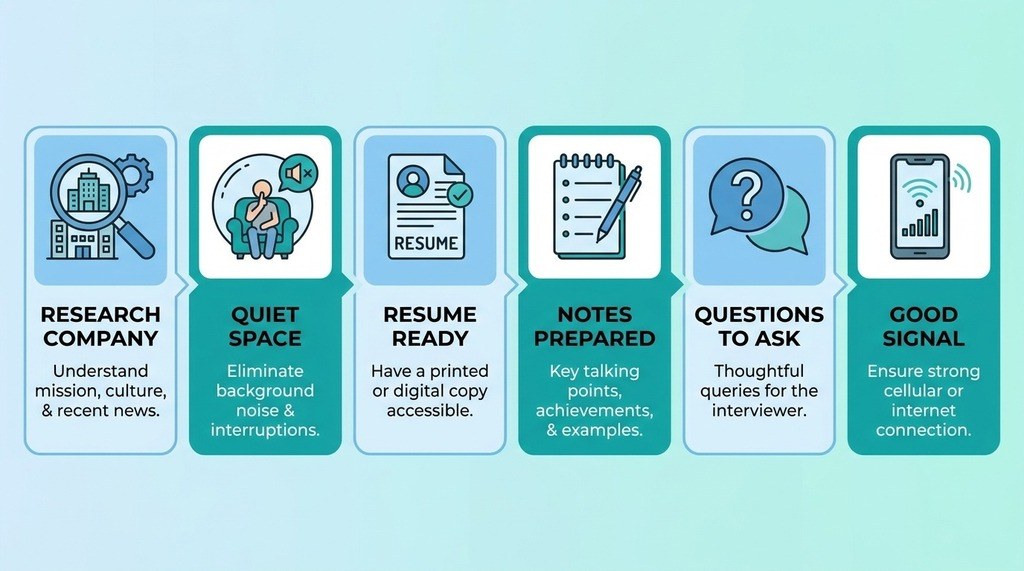
- Research the company thoroughly — products, culture, recent news
- Re-read the job description and prepare specific examples for each key requirement
- Have your resume in front of you (printed or on screen)
- Prepare 3–5 questions to ask them
- Find a quiet space with no background noise or interruptions
- Charge your phone fully — or use a landline if available
- Test your phone signal in that location in advance
During the Call: Voice and Energy
Without visual cues, your voice carries all the weight. Specific techniques:
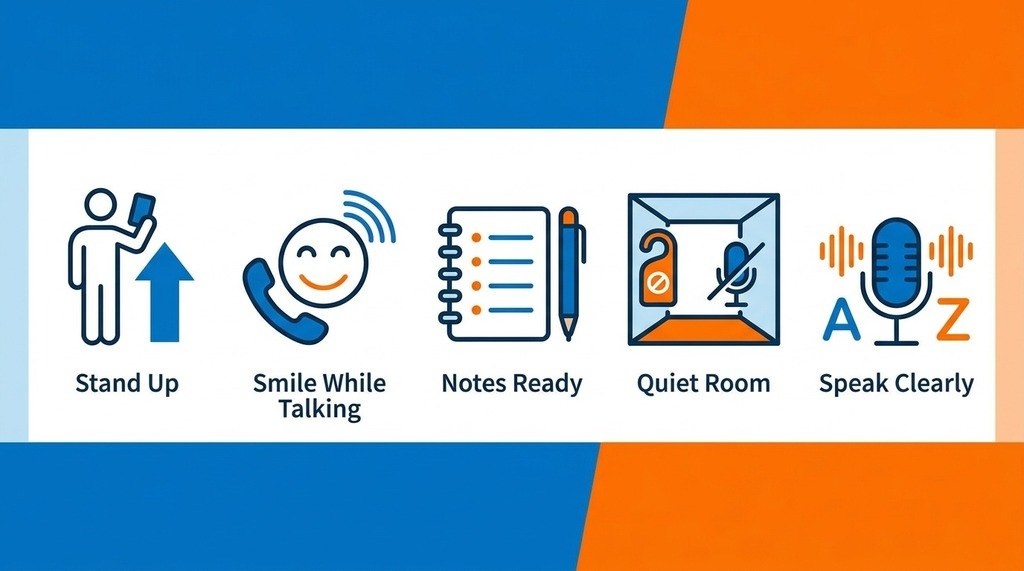
- Stand up or sit upright — your posture directly affects your vocal energy and confidence
- Smile while speaking — people can genuinely hear a smile in your voice
- Speak slower and clearer than in conversation — nerves make people rush
- Pause before answering — silence is fine on a phone call and shows you are thinking
- Use the interviewer’s name occasionally — it personalizes the call
Take Notes During the Call
Write down the interviewer’s name, key points they share about the role, anything that comes up that you want to research more, and specific things to reference in your thank you email. Notes also help you stay focused and signal you are taking the call seriously.
The Questions They Will Almost Certainly Ask
- “Tell me about yourself” — have a tight 60-second professional summary ready
- “Why are you interested in this role?” — be specific to this company
- “What is your current salary / expectations?” — know your number and answer confidently
- “What is your notice period / availability?” — have a clear answer
- “Walk me through your resume” — be able to summarize your journey clearly
Handling the Salary Question on a Phone Screen
Recruiters often ask about salary expectations early. Options:
- State a well-researched range: “Based on my research and experience, I am looking for something in the range of $X–$Y”
- Deflect gracefully: “I am still learning about the full scope of the role — I would prefer to discuss compensation once I understand it better. What is the budgeted range for this position?”
At the End of the Call
Always ask about next steps: “What does the process look like from here, and when should I expect to hear back?” Then send a brief thank you email within 2 hours — most phone screen candidates never do this, and it sets you apart immediately.
Conclusion
Phone interviews are the gatekeepers to every great opportunity. Treat them with full preparation, bring your energy through your voice, and follow up professionally. The candidates who advance are not always the most qualified — they are the most prepared.