
“Managing up” is one of the most valuable and least taught career skills. It is not about flattery or politics — it is about understanding what your manager needs to succeed and proactively making their job easier. Professionals who master this skill advance faster, get better opportunities, and navigate organizations more effectively.
What Does “Managing Up” Actually Mean?
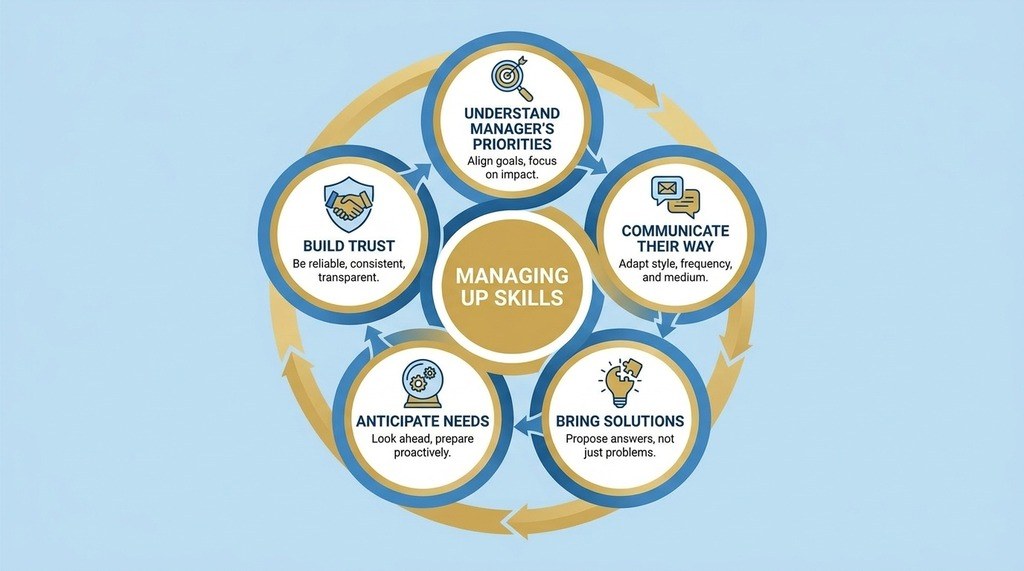
Managing up means taking an active, strategic role in shaping your relationship with your manager rather than passively reacting to their direction. It involves:
- Understanding your manager’s goals, pressures, and priorities
- Communicating in the way they prefer and at the frequency they need
- Bringing solutions, not just problems
- Proactively keeping them informed so they are never surprised
- Helping them succeed — because their success often enables yours
Step 1: Understand Your Manager’s World
Start by genuinely trying to understand what your manager is accountable for, what pressures they face, and what keeps them up at night. Ask directly: “What are your top priorities this quarter?” or “What does success in our team look like from your perspective?” This simple curiosity builds enormous goodwill — and gives you critical information about how to align your work to what actually matters.
Step 2: Learn Their Communication Style
Every manager is different. Some want daily brief updates. Others prefer a weekly summary. Some love Slack; others prefer email. Some want bullet points; others want narrative. Paying attention to how they communicate and mirroring it is one of the quickest ways to build a productive working relationship.
If unsure, simply ask: “How do you prefer to receive updates, and how often is most helpful for you?”
Step 3: Never Let Them Be Surprised
Nothing damages managerial trust faster than being caught off guard. If a project is going off track, tell your manager early — before it becomes a crisis. If a deadline is at risk, flag it proactively. If there is tension with a colleague, address it before it escalates. Managers value early warning infinitely more than discovering problems late.
Step 4: Bring Solutions, Not Just Problems
When you bring a problem to your manager, come with at least one proposed solution. This does not mean you always have the answer — but thinking it through before the conversation demonstrates initiative and saves their time. “I have run into an issue with X. I have two possible approaches — can I walk you through them and get your input?”
Step 5: Acknowledge Their Strengths and Give Credit
If your manager gives you great advice, tell them. If they set you up for a win, acknowledge it. This is not flattery — it is genuine feedback that helps them understand what is working. And it creates a culture of mutual recognition in your relationship.
Managing Different Types of Managers
- The micromanager: Provide more frequent updates proactively — remove their need to check in by checking in yourself
- The hands-off manager: Be self-directed, but flag anything requiring their input clearly and early
- The stressed/busy manager: Make every interaction as brief and outcome-focused as possible
- The new manager: Help them understand the team’s history and dynamics — you can be a valuable ally
Conclusion
Managing up is not manipulation — it is empathy applied professionally. When you genuinely understand your manager’s world and work to make them succeed, you build the kind of trust that leads to stretch assignments, promotions, and strong references. It is one of the highest-return investments you can make in your career.