Most professionals know they should be setting career development goals — but few do it with the structure and intention needed to actually achieve them. Without clear goals, career growth becomes accidental rather than intentional. Here is how to set development goals that genuinely move your career forward.
Why Professional Development Goals Matter
Professionals who set intentional development goals earn more, advance faster, and report higher job satisfaction than those who drift through their careers reactively. Goal setting creates focus, drives consistent behavior, and gives you a framework for tracking progress.
Types of Professional Development Goals
- Skill goals: Acquire a specific technical or soft skill
- Position goals: Reach a specific job title or role
- Network goals: Build relationships with a specific number of professionals in your industry
- Credential goals: Complete a certification, course, or degree
- Performance goals: Achieve a measurable result in your current role
- Reputation goals: Become known for something specific in your field
The SMART Goal Framework
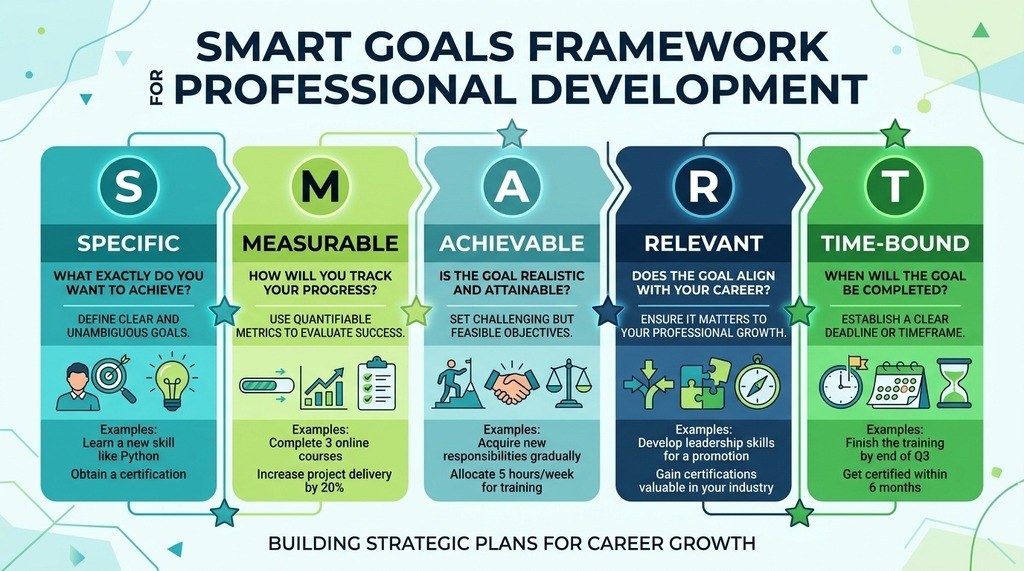
Every professional development goal should be SMART:
- Specific: “Become a better communicator” → “Complete a public speaking course and give one presentation at work by June”
- Measurable: Define how you will know you have achieved it
- Achievable: Challenging but realistic given your current situation
- Relevant: Aligned with where you want your career to go
- Time-bound: A clear deadline creates urgency and accountability
Setting a 90-Day Development Plan
Annual goals are too far away to drive daily behavior. Break your development goals into 90-day sprints:
- Choose 1–3 development goals for the quarter (not more)
- Identify the specific actions required each week
- Schedule time for development in your calendar (treat it like a meeting)
- Review progress every two weeks and adjust if needed
Making It Stick: Accountability Systems
- Share your goal with a trusted colleague or mentor
- Track progress in a journal, Notion page, or development log
- Build habits (30 minutes of learning daily) rather than relying on motivation
- Celebrate milestones — progress deserves acknowledgment
Conclusion
Career development is not something that happens to you — it is something you build intentionally, one goal at a time. Set specific, time-bound goals, create accountability structures, and show up consistently. The gap between where you are and where you want to be is shorter than you think.