Burnout is not just feeling tired after a hard week. It is a state of chronic physical, emotional, and mental exhaustion caused by prolonged workplace stress. The World Health Organization officially recognizes burnout as an occupational phenomenon — and in 2026, it affects an estimated 77% of professionals at some point in their careers.
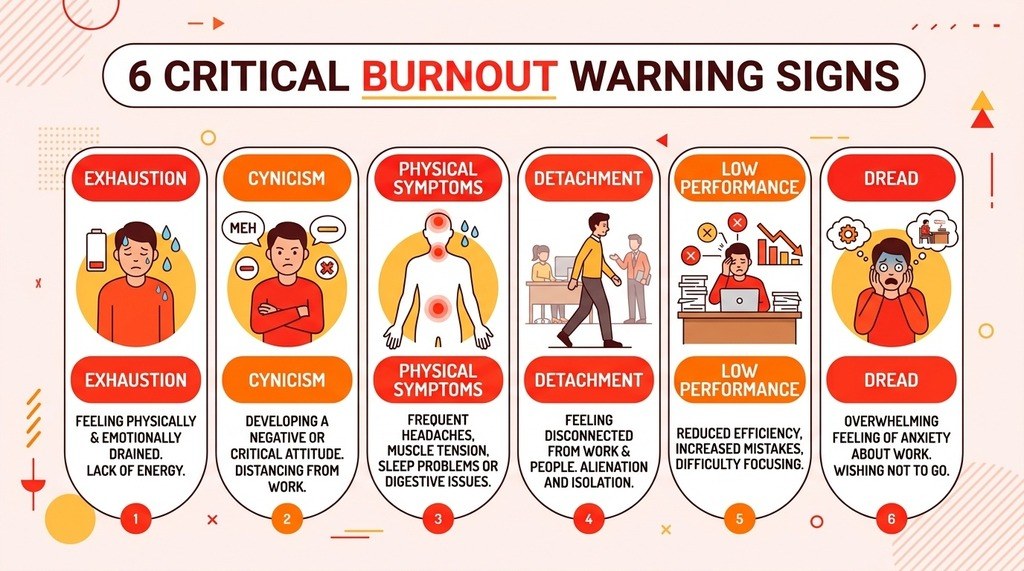
The Warning Signs of Burnout
Burnout develops gradually. Recognizing the early signs can prevent a full breakdown:
- Constant exhaustion even after rest
- Cynicism or detachment from work that you previously cared about
- Reduced effectiveness and inability to concentrate
- Physical symptoms: headaches, insomnia, frequent illness
- Feeling like nothing you do makes a difference
- Dreading Monday morning every Sunday evening
- Increased irritability with colleagues or clients
What Causes Workplace Burnout?
- Unmanageable workload — Too much to do with too little time or support
- Lack of control — No autonomy over decisions that affect your work
- Inadequate recognition — Working hard with no acknowledgment or reward
- Poor relationships — Conflict with managers, colleagues, or clients
- Unfair treatment — Feeling that the system is biased or unjust
- Values mismatch — Doing work that conflicts with your personal values
How to Recover From Burnout
Step 1: Acknowledge It Without Judgment
Many professionals push through burnout believing it is weakness. It is not. Burnout is a physiological and psychological response to sustained stress. Acknowledging it is the first and most important step.
Step 2: Create Space to Rest
You cannot think your way out of burnout. Rest is non-negotiable. Use available leave, reduce overtime, and create genuine boundaries between work and personal life.
Step 3: Address the Root Cause
Rest alone is not a cure if you return to the same conditions. Identify the specific cause of your burnout and take action: have a direct conversation with your manager, adjust your workload, or begin planning a career transition if the environment itself is toxic.
Step 4: Reconnect With What Matters
Burnout often disconnects us from our sense of purpose. Reconnect with hobbies, relationships, and activities outside of work. Regular exercise, quality sleep, and time in nature are all evidence-based burnout recovery tools.
Step 5: Seek Professional Support
A therapist or counselor who specializes in workplace stress can provide significant support. Many employers offer EAP (Employee Assistance Programs) that include free counseling sessions — check if yours does.
Conclusion
Burnout is real, serious, and far more common than anyone admits. If you recognize the signs in yourself, take action now — not when it becomes a crisis. Your health and wellbeing are more important than any job.