
An internship is often the single most important career investment a student or early professional can make. It provides real experience, professional references, industry connections, and frequently leads directly to full-time employment. This comprehensive guide walks you through every stage — from finding the right internship to converting it into a job offer.
Why Internships Are More Important Than Ever in 2026
In a job market that increasingly values demonstrated skills over degrees, internship experience acts as proof of capability. Companies like Google, Goldman Sachs, and Deloitte hire the majority of their entry-level class from their intern alumni. An internship is not just work experience — it is a 10-to-12-week job interview.
Types of Internships
- Paid internships: The standard at major companies. Compensation ranges from minimum wage to $50–$100+/hour at top tech firms.
- Unpaid internships: Legal in specific contexts (academic credit, nonprofit). Worth doing early if the experience and mentorship are exceptional.
- Remote internships: Now widely available across all industries. Offer more geographic flexibility.
- Micro-internships: Short-term project-based work (days to weeks). Platforms like Parker Dewey specialize in these.
How to Find the Right Internship
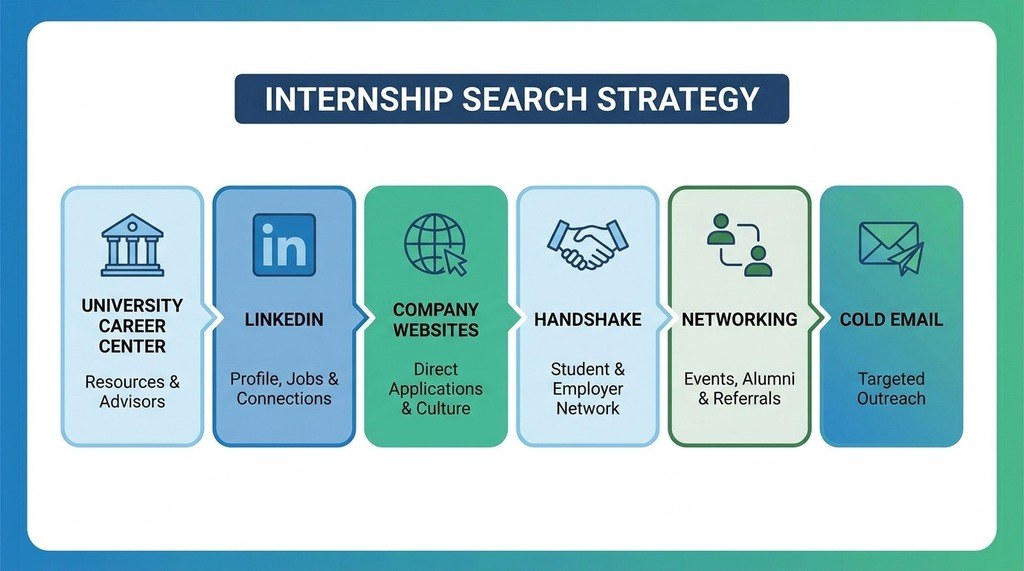
- University career center: First stop — they have established employer relationships
- LinkedIn: Search “internship” filtered by location and field; connect with company recruiters
- Handshake: The leading platform for student-employer connections
- Company career pages: Apply directly to companies you admire
- Professional associations: Many industry associations maintain internship boards
- Cold outreach: Email professionals at target companies. A well-crafted cold email to a team you want to join is often more effective than a formal application.
Writing a Strong Internship Application
Internship applications are evaluated differently from full-time roles. Recruiters expect limited experience — they look for:
- Academic achievement and relevant coursework
- Genuine enthusiasm for the company and field
- Any relevant project or portfolio work
- A clear, well-written cover letter that shows communication skill
How to Succeed During Your Internship
The internship itself is where most value is created — or wasted. Key success principles:
- Over-communicate: Always clarify expectations and check in on progress
- Take notes in every meeting: Shows engagement and prevents repetitive questions
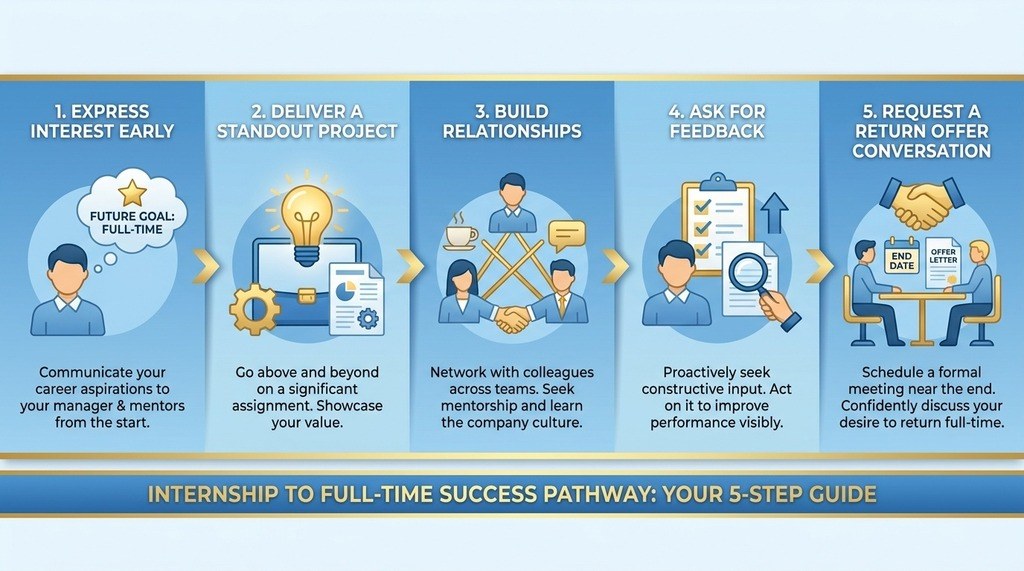
- Ask for feedback at the midpoint: “Is there anything I should be doing differently?” gives you time to adjust
- Build relationships beyond your direct team: Have coffee chats with people in adjacent roles
- Deliver one standout contribution: Something you can point to at the end
Converting an Internship to a Full-Time Offer
If a return offer is your goal, express it clearly near the end of your internship: “I have loved my time here and would love to return full-time. What does the conversion process look like, and what can I do in my remaining weeks to make a strong case?” Most companies that have a full-time hire in mind will tell you — and the ones that do not will at least be impressed by your directness.
Conclusion
Every career milestone starts somewhere. Your internship is the beginning of your professional story — treat it with the seriousness, curiosity, and energy of someone who knows it could change the trajectory of their career. Because it very often does.