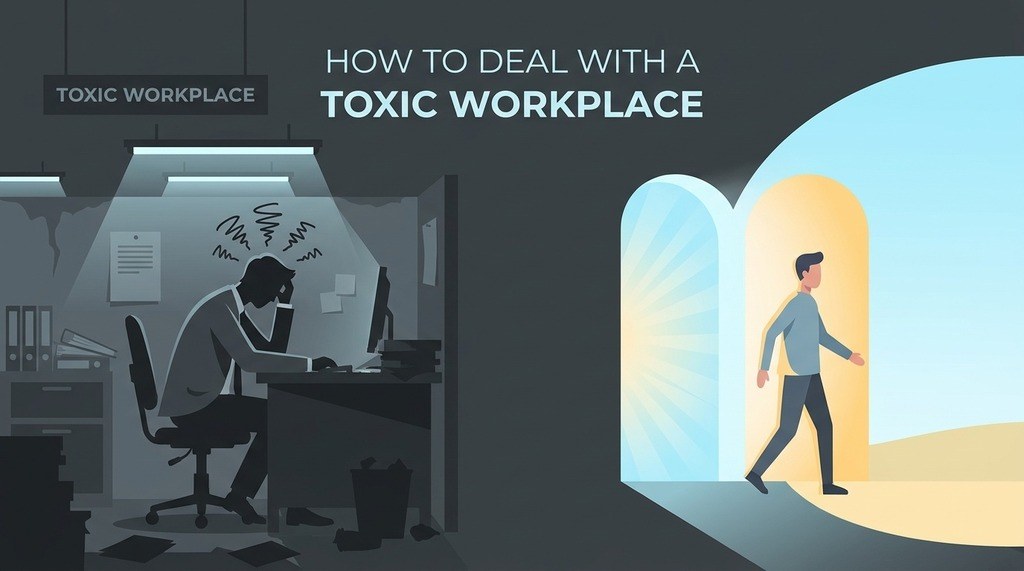
Toxic workplaces are more common than most people admit — and more damaging than most people realize. Chronic stress, poor management, workplace bullying, and dysfunctional cultures do real harm to mental and physical health. This guide helps you identify toxicity, navigate it professionally, and ultimately make the decision that protects both your career and your wellbeing.
Signs of a Toxic Workplace
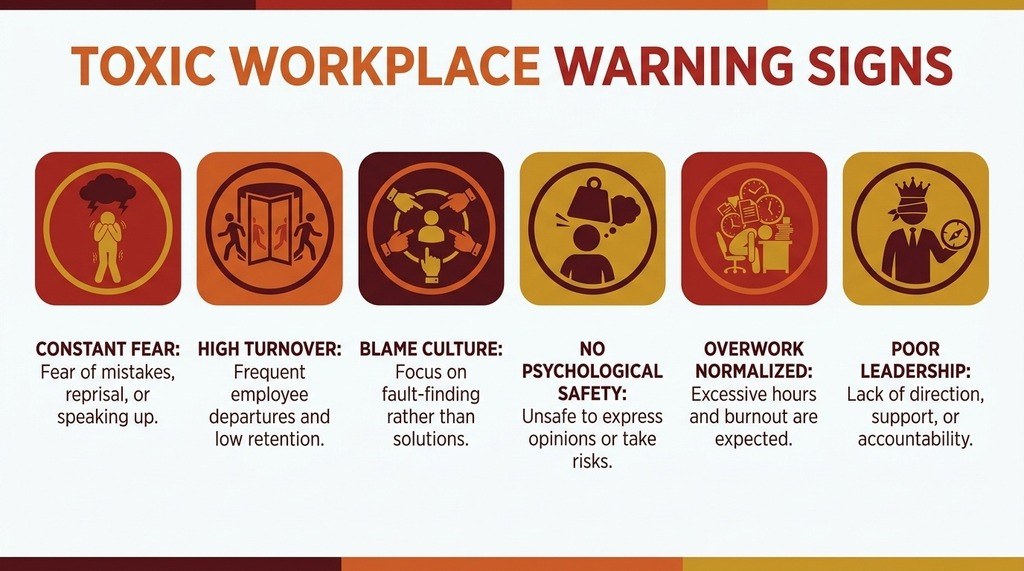
- Persistent fear, anxiety, or dread about going to work
- Blame culture where mistakes are punished rather than learned from
- High turnover — people are constantly leaving
- Leadership that rules through intimidation or favoritism
- Gossip, cliques, and exclusionary behavior normalized
- No psychological safety — people afraid to speak up or disagree
- Overwork normalized and recovery discouraged
- Consistent underpayment relative to market
- Your values are regularly asked to be compromised
Strategies for Surviving a Toxic Workplace
Protect Your Psychological Safety
Limit exposure to the most toxic dynamics where possible. Reduce engagement with gossip, avoid escalating conflicts unnecessarily, and maintain clear emotional boundaries. Your wellbeing takes priority over workplace drama.
Document Everything
If you experience bullying, discrimination, or harassment — document it meticulously. Dates, times, what was said, and who witnessed it. This creates a factual record for HR, legal counsel, or labor board complaints if needed.
Use HR Channels Formally
If informal resolution has failed, formal HR complaints create documented records and legal obligations for the company to investigate. Understand that HR’s primary loyalty is to the organization — but formal complaints still carry legal weight.
Build Your Exit Plan in Parallel
If the environment is genuinely toxic and unlikely to change, begin your job search while still employed. Employed candidates are significantly stronger in the market. Do not wait until you are at a breaking point — your mental health and professional reputation are worth protecting proactively.
When Should You Leave?
Consider leaving when:
- Your physical or mental health is deteriorating
- You have exhausted internal channels without meaningful change
- The toxicity comes from the top (culture set by leadership is very hard to change)
- You dread every working day and have for months
- Your core values are being consistently violated

Leaving Without Burning Bridges
Even when leaving a toxic environment, maintain professional conduct through your last day. Future employers will check references. The professional world is small. You do not need to forgive toxic behavior — but you do need to exit gracefully for your own career protection.
Conclusion
You spend a third of your waking life at work. That environment has a profound impact on your health, relationships, and sense of self-worth. Toxic workplaces are not your fault — and staying in one is not a virtue. Recognize the signs, protect yourself, and when the time comes — leave with your head held high.