An employment contract is one of the most important documents you will ever sign — yet most people read it quickly, anxious to start the new job, and miss critical clauses that could affect them years later. This guide walks you through everything you need to understand and verify before signing.
Why Contracts Matter More Than You Think
Once signed, an employment contract is legally binding. Terms around non-compete clauses, intellectual property ownership, and termination conditions can follow you for years after leaving the company. Take the time to read it carefully — or have a lawyer review it for high-stakes roles.
Key Clauses to Review
1. Compensation and Benefits
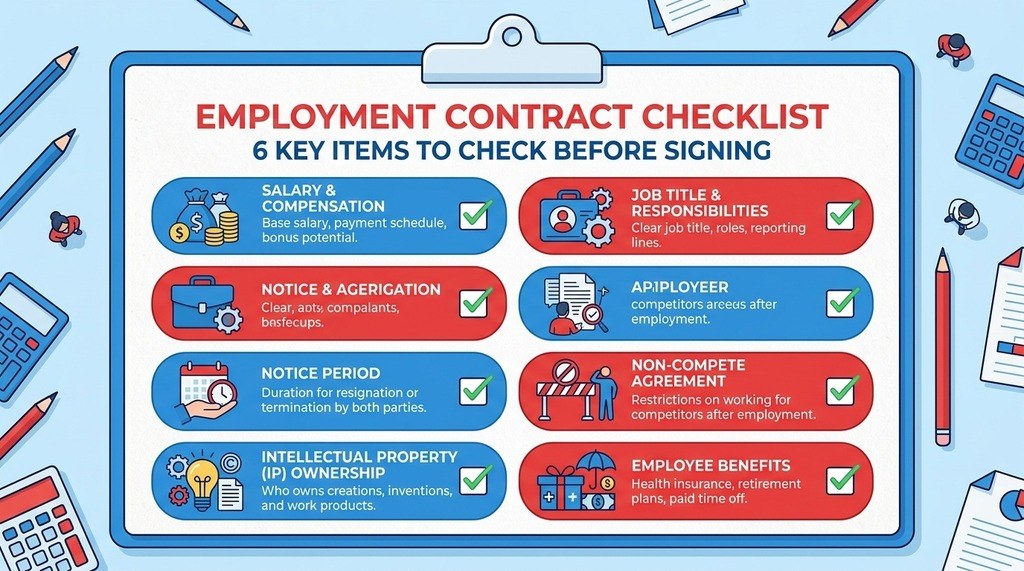
Verify the exact base salary, payment frequency, and bonus structure. Is the bonus discretionary (company decides) or contractual (guaranteed at a certain threshold)? Confirm what benefits are included and when they activate.
2. Job Title and Responsibilities
Make sure your title and core responsibilities are clearly defined. Vague descriptions can leave you doing far more than discussed — with no recourse.
3. Notice Period
Both parties need to give notice before leaving or dismissing. Understand your notice period — it affects how quickly you can take another job or how long you are protected before termination takes effect.
4. Non-Compete and Non-Solicitation Clauses
These are often the most misunderstood clauses:
- Non-compete: Prevents you from working for competitors for a set period after leaving
- Non-solicitation: Prevents you from taking clients or colleagues with you when you leave
Check the geographic scope, duration, and enforceability in your country. In many jurisdictions, overly broad non-competes are unenforceable — but you still need to know what you are agreeing to.
5. Intellectual Property (IP) Ownership
Most employment contracts include a clause stating that work created during employment belongs to the employer. Be aware: in some contracts, this extends to work done in your personal time using company resources. If you freelance or have side projects, this clause matters.
6. Termination Conditions
Understand under what conditions the company can terminate your employment — with and without cause. Check what severance (if any) is offered in different termination scenarios.
7. Probationary Period
Many contracts include a probation period (typically 3–6 months) during which notice periods and benefits may be reduced. Know what this means for you.
Red Flags to Watch For
- Extremely broad non-compete clauses (years long, worldwide scope)
- IP clauses that claim ownership of all work including personal projects
- No mention of overtime compensation for salaried roles
- Verbal promises that are not in the written contract
- Pressure to sign immediately without time to review
Conclusion
You have every right to ask questions, request changes, and take time to review an employment contract. A good employer will respect this. Read everything, understand what you are committing to, and never let excitement rush you into overlooking something that matters.