The workforce has fundamentally changed. In 2026, more than a third of the global workforce does some form of freelance or contract work. But is freelancing right for you — or is the stability of full-time employment the better choice? Here is the honest comparison.
The Case for Freelancing
Freedom and Flexibility
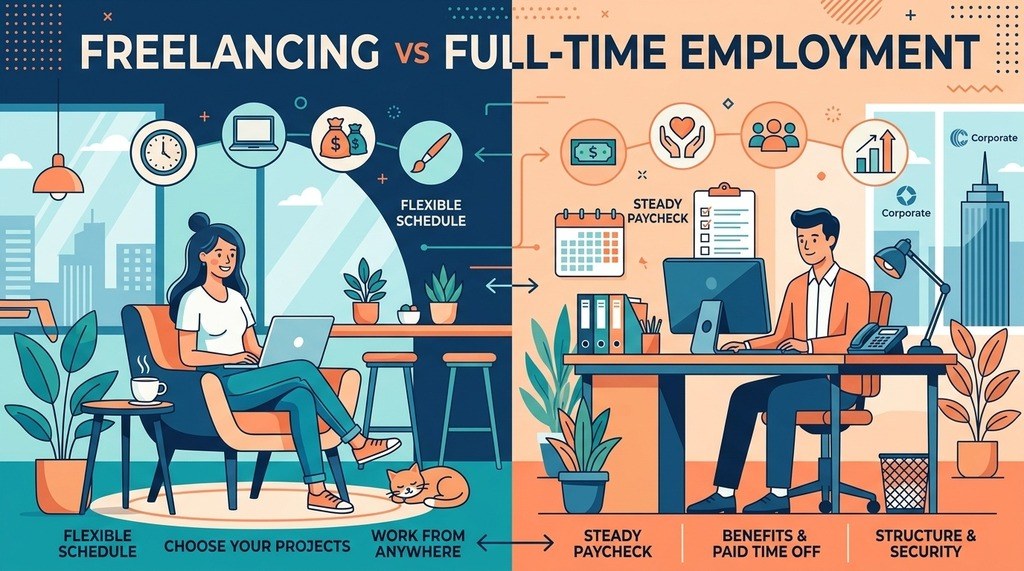
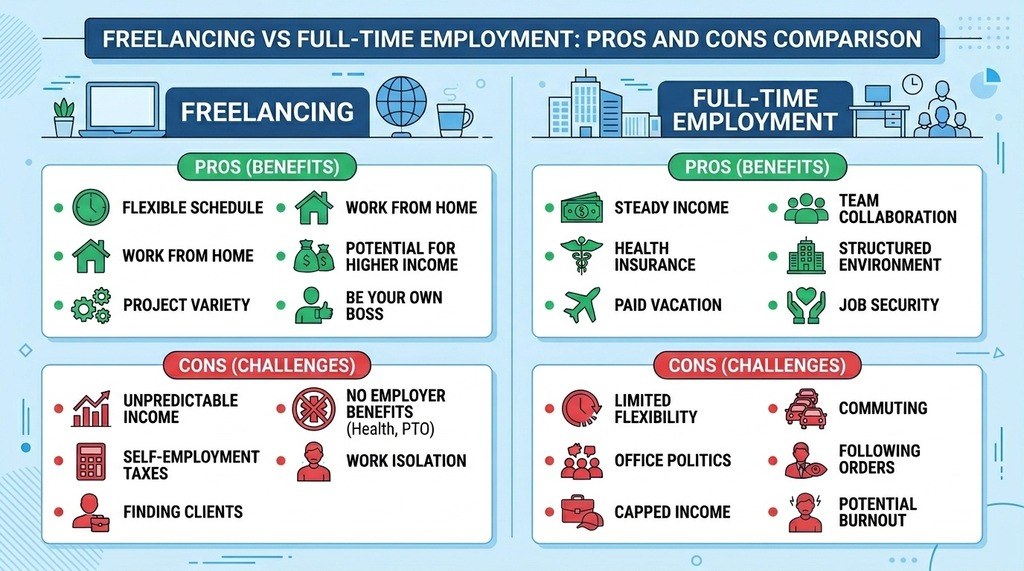
Freelancers set their own hours, choose their clients, and work from anywhere. For many, this freedom is the primary appeal. No performance reviews, no office politics, no commute.
Higher Earning Potential
Skilled freelancers can charge 2–4x the hourly equivalent of a salaried employee. Senior developers, consultants, and designers in high-demand niches frequently earn significantly more freelancing than they could in any single salaried role.
Portfolio and Experience Diversity
Working with many clients across different industries accelerates skill development and creates a varied, impressive portfolio.
The Case Against Freelancing
Income Instability
Feast-or-famine cycles are real. Some months you are overwhelmed with work; others are slow. This unpredictability is one of the top reasons people return to full-time employment.
No Benefits
Freelancers must fund their own health insurance, retirement savings, paid leave, and professional development. These costs can easily consume 20–30% of gross earnings.
Self-Marketing and Administration
Running a freelance business means constant client acquisition, invoicing, tax management, and contracts — time that salaried employees spend on their actual work.
The Case for Full-Time Employment
- Predictable income and financial stability
- Employee benefits (healthcare, pension, paid leave)
- Structured career growth and mentorship
- Team collaboration and social connection
- Company-funded training and development
Questions to Ask Yourself
- Do I have a financial buffer to handle slow months?
- Am I comfortable with self-marketing and client management?
- Do I value flexibility or stability more right now?
- Is my skill set in high enough demand to command freelance rates?
- Do I thrive working alone, or do I need team energy?
The Hybrid Approach
Many professionals start freelancing as a side hustle while employed full-time, gradually building income and client base until they can transition fully. This is often the smartest path — it eliminates the income risk of jumping into freelancing cold.
Conclusion
Neither freelancing nor full-time employment is universally better. The right choice depends on your financial situation, personality, career stage, and goals. Many successful professionals do both at different points in their careers — and that flexibility is one of the best things about the modern job market.