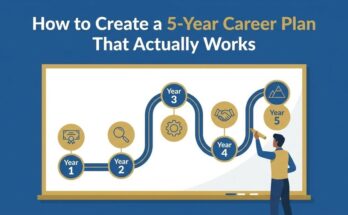
Project management is one of the most universally needed roles across every industry — from construction to software, healthcare to marketing. In 2026, certified project managers with proven delivery track records are in high demand globally. Here is your complete roadmap to entering or advancing in this career.
What Do Project Managers Actually Do?
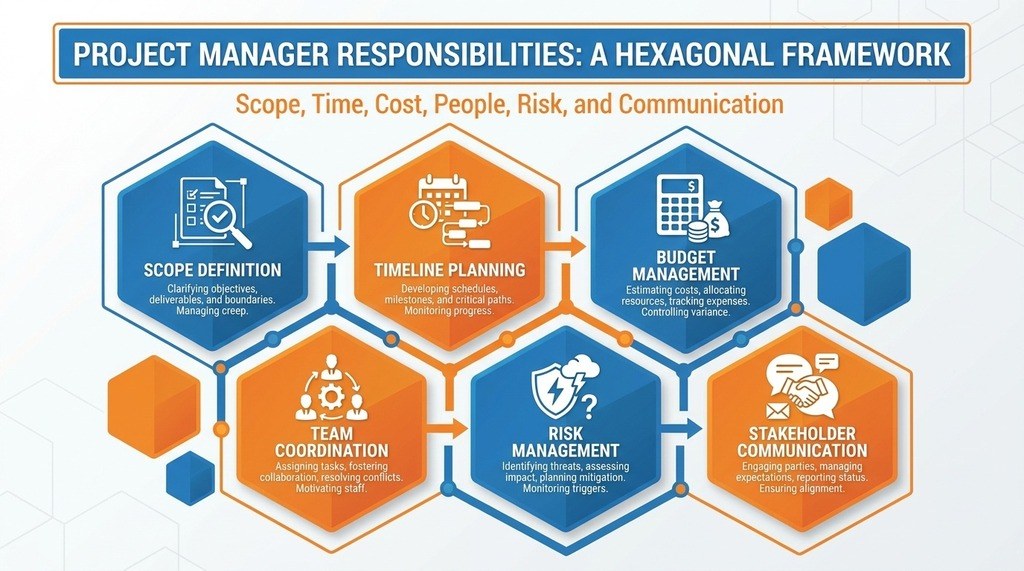
Project managers plan, execute, and close projects — ensuring they are delivered on time, within budget, and to the required quality standard. Core responsibilities include:
- Defining project scope, goals, and deliverables
- Building project plans with timelines and milestones
- Managing budgets and resources
- Coordinating cross-functional teams
- Identifying and mitigating risks
- Communicating progress to stakeholders
- Closing projects and capturing lessons learned
Essential Project Management Methodologies
Waterfall
A linear, sequential approach where each project phase is completed before the next begins. Common in construction, manufacturing, and large infrastructure projects.
Agile
An iterative, flexible approach that breaks work into short sprints with continuous feedback loops. The dominant methodology in software development and increasingly used across all knowledge work.
Scrum
A specific Agile framework using fixed-length sprints (1–4 weeks), daily standups, sprint reviews, and retrospectives. The most widely used framework in tech teams globally.
PMP (Project Management Professional) Framework
The globally recognized standard published by PMI (Project Management Institute), covering five process groups: Initiating, Planning, Executing, Monitoring and Controlling, and Closing.
Key Certifications for Project Managers in 2026
- PMP (Project Management Professional) — The gold standard globally. Requires 36 months of experience + 35 hours of education. Worth significantly more in salary terms.
- CAPM (Certified Associate in Project Management) — Entry-level PMI certification. No experience required. Good starting point.
- Certified Scrum Master (CSM) — Most widely recognized Agile certification. 2-day course + exam.
- PMI-ACP (Agile Certified Practitioner) — Advanced Agile certification for experienced practitioners.
- PRINCE2 — Popular in the UK, Europe, and Australia.
How to Break Into Project Management Without Prior Experience
- Start by managing projects informally in your current role — volunteer to lead cross-functional initiatives
- Get the CAPM or CSM certification first (lower barriers to entry)
- Target “Project Coordinator” or “Junior PM” roles as entry points
- Build a portfolio of projects managed — even internal or volunteer ones count
- Learn the core tools: MS Project, Jira, Asana, Monday.com, Smartsheet
Project Manager Salary in 2026
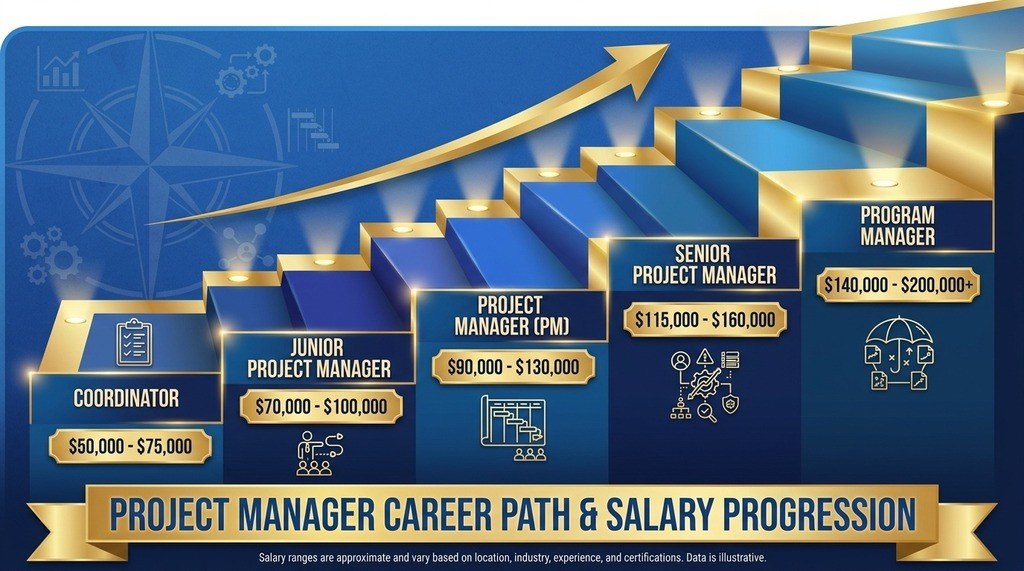
- Entry Level / Project Coordinator: $55,000 – $80,000
- Mid-Level Project Manager: $85,000 – $120,000
- Senior Project Manager (PMP): $120,000 – $160,000+
- Program Manager / Director of PMO: $150,000 – $200,000+
Conclusion
Project management is one of the most career-portable roles that exists — skills and certifications translate across industries, and demand is consistent globally. Whether you are entering from another field or building PM skills in your current role, the investment in certification and experience pays compounding returns throughout your career.