Most employees approach their self-evaluation by listing job duties and vague accomplishments. The professionals who advance treat it as a strategic opportunity — a formal document that shapes how leadership perceives their value and potential. Here is how to write a self-review that gets you noticed, remembered, and rewarded.
Why Your Self-Review Matters More Than You Think
Many managers use employee self-reviews as the primary input to write the official review. If you undersell yourself, your manager may not have the specifics needed to advocate for your raise or promotion to their own leadership. Think of your self-review as a brief you write for the people deciding your career progression.
Before You Write: Gather Your Evidence
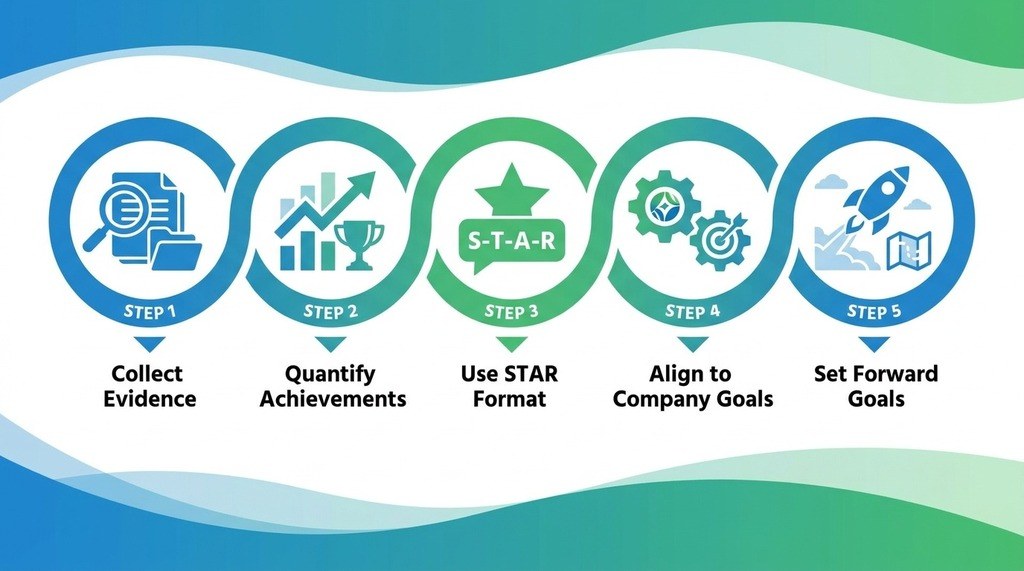
Pull together the past year’s wins. Review emails, project files, data, and positive feedback received. Look for:
- Projects you led or significantly contributed to
- Revenue generated, costs saved, efficiency gains
- Problems you solved and how
- People you mentored or helped
- Positive feedback from managers, peers, or clients
- Goals set at last review — and whether you hit them
How to Structure Your Answers
Use the STAR format (Situation, Task, Action, Result) to write each achievement. Even in a bullet point, lead with the result:
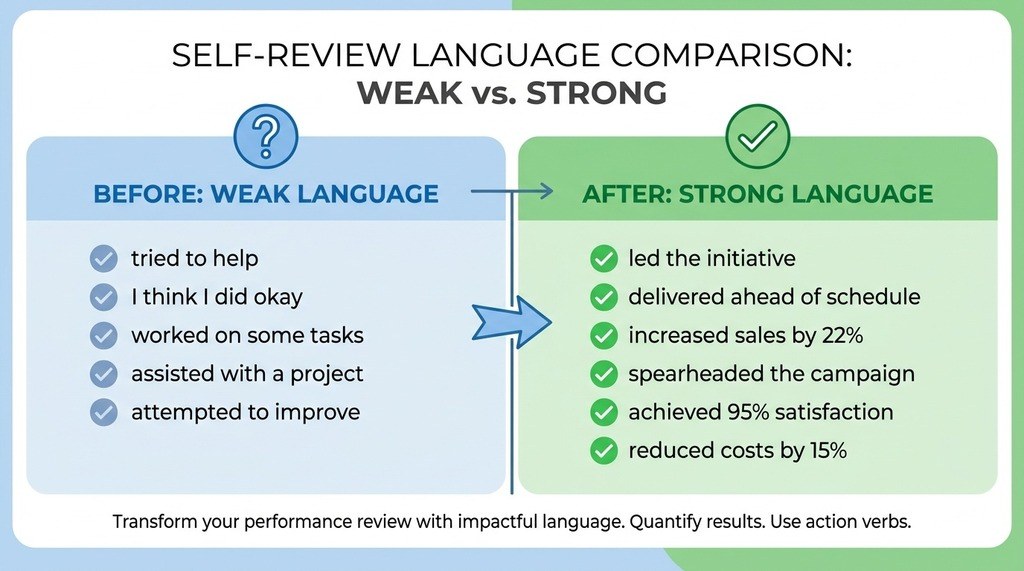
Weak: “Managed the Q3 product launch.”
Strong: “Led cross-functional Q3 product launch across 4 teams, delivered 2 weeks ahead of schedule, resulting in $1.2M in first-month revenue — 18% above forecast.”
Key Sections to Nail
Achievements and Impact
Lead with your most significant wins. Use numbers wherever possible. Do not list everything you did — select the 4–6 things with the most demonstrable business impact.
Areas for Development
Be honest but strategic. Choose genuine development areas that you have already started working on. Frame them positively: “I am developing my data presentation skills by completing [course] and now consistently include data visualization in my stakeholder updates.”
Goals for the Coming Year
Propose ambitious, specific goals that align with company priorities. This demonstrates strategic thinking and gives your manager something concrete to support you toward.
Tone: Confident, Not Arrogant
Self-reviews require confident self-advocacy. Avoid minimizing language (“I think I did okay,” “I tried to…”) and overly apologetic qualifiers. State your accomplishments directly. Confidence in a self-review is expected and appropriate — not arrogance.
Conclusion
Your performance review is your annual case for your career progression. Invest the time, gather the evidence, quantify your impact, and write it with the confidence of someone who knows their value. The best advocates for your career are the ones who see your potential — and that starts with the story you tell about yourself.