Salary reviews happen once or twice a year for most professionals — but the preparation that determines the outcome happens in the weeks and months before that meeting. Walking in underprepared means leaving money on the table. Here is how to prepare thoroughly and make the most of your review.
Start Tracking Achievements Year-Round
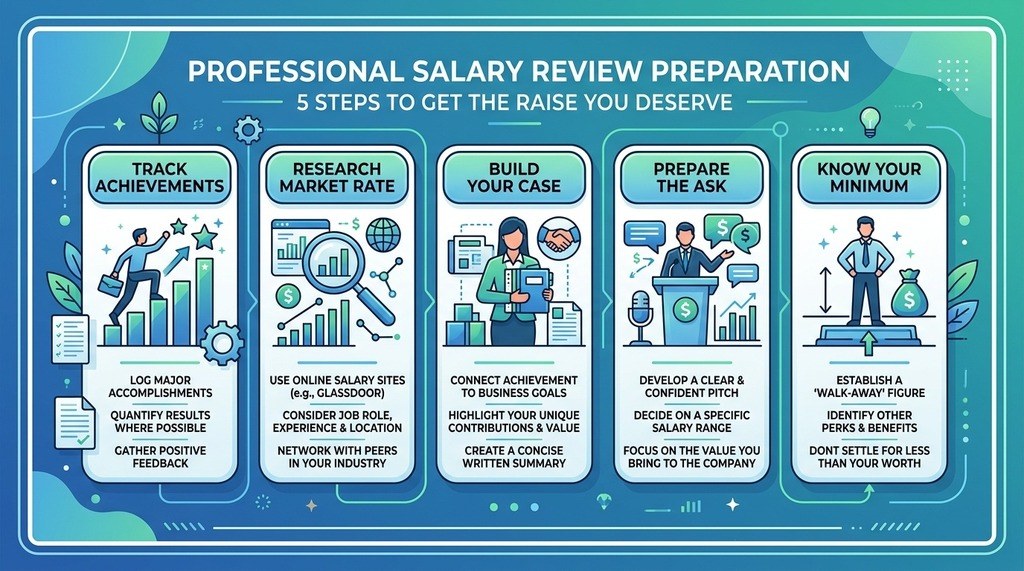
The biggest preparation mistake is trying to remember your accomplishments the week before your review. Instead, keep a running “wins document” throughout the year — a simple log of projects completed, problems solved, results delivered, and positive feedback received. When review time comes, you have everything at your fingertips.
Quantify Your Impact Before the Meeting
Performance reviews respond to numbers. Before your review, translate your achievements into measurable impact:
- Revenue generated or influenced
- Cost savings identified or implemented
- Time saved through process improvements
- Team members hired, trained, or mentored
- Projects delivered on time and within budget
- Customer satisfaction scores improved
Research the Market Before You Go In
Know your market value before any review conversation. Use Glassdoor, LinkedIn Salary, Payscale, and industry salary guides to understand what comparable professionals earn. This data is not aggressive — it is professional and expected.
Know What You Are Going to Ask For
Enter every salary review with a specific number or range in mind. Vague hope for “a raise” rarely produces results. Know your target (what you want), your anchor (what you would start the negotiation at if you lead), and your walk-away point (the minimum that would satisfy you).
What to Say in the Meeting
Frame the conversation around your value to the business, not your personal financial needs. Compare these approaches:
Weak framing: “I really need more money because my rent went up.”
Strong framing: “Based on my contributions this year — including [specific achievement] and the market data I have reviewed — I believe a salary of [amount] reflects the value I am delivering and is competitive with what similar roles pay externally.”
Handle Common Objections
- “Budget is tight this year” → “I understand. Can we agree on a timeline and the milestone that would trigger the review?”
- “Everyone got the same increase” → “I appreciate that. I want to discuss how my specific contributions justify recognition beyond the standard band.”
- “You are already at the top of your band” → “Then let us talk about what promotion to the next band looks like and what timeline is realistic.”
If You Do Not Get What You Asked For
Do not express frustration or make threats in the moment. Instead: “I appreciate your consideration. I would like to understand specifically what would need to change for this to be revisited in the next 3–6 months.” Then hold your manager to that answer — and if it repeatedly is not delivered, treat the external market as your realistic option.
Conclusion
Salary reviews are predictable events that reward preparation far more than talent alone. Document your year, research the market, build a specific case, and walk in with confidence. The professionals who receive the best outcomes are not always the highest performers — they are the ones most prepared to make their case.