Workplace etiquette has evolved significantly in 2026 — remote work, global teams, and changing social norms have rewritten many of the old rules. But some fundamentals remain constant: showing respect for colleagues’ time, space, and communication boundaries is always the foundation of a professional reputation.
Communication Etiquette
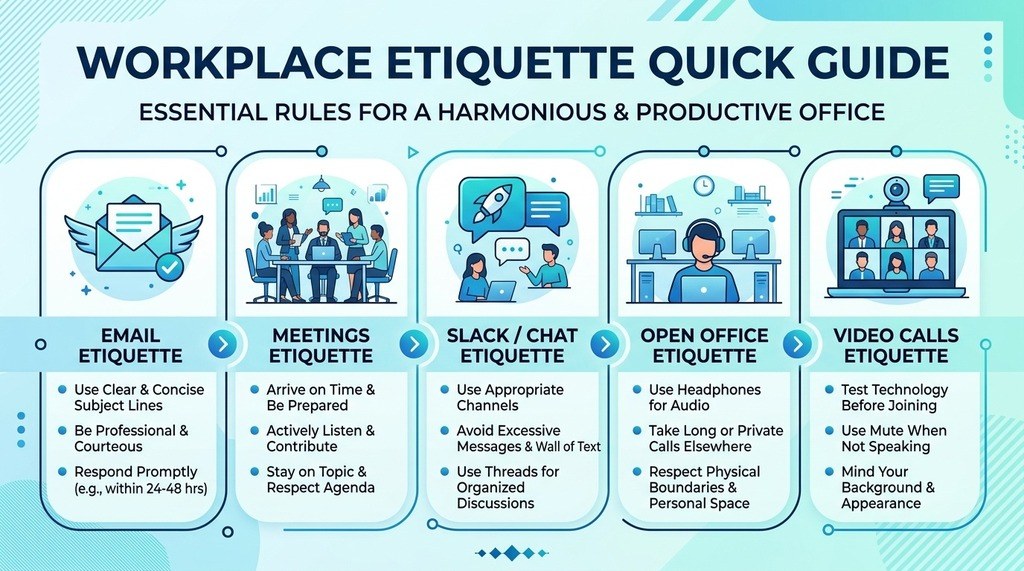
- Respond to emails within one business day — or acknowledge receipt if you need more time
- Use clear, specific subject lines
- Do not use Reply All unless everyone on the thread genuinely needs your response
- Proofread before sending — errors undermine professionalism
- Do not send passive-aggressive emails in the heat of frustration
Meetings
- Be on time — being late signals that others’ time matters less than yours
- Come prepared — read materials, know the agenda
- Put your phone away and give the meeting your full attention
- Do not dominate discussions — create space for others to contribute
- Follow up with action items within 24 hours
Messaging and Chat (Slack, Teams)
- Respect working hours — do not message colleagues at midnight unless urgent
- Use status indicators accurately (away, do not disturb, in a meeting)
- Keep casual channels casual and professional channels professional
- Do not use message threads to have arguments — move to voice or video when tensions arise
Office and Shared Space Etiquette
- Keep shared spaces clean — kitchen, meeting rooms, communal desks
- Respect concentration by not interrupting colleagues who are clearly focused
- Take personal calls away from open-plan areas
- Acknowledge colleagues in the hallway — a simple nod or “good morning” costs nothing
- Respect the cultural and personal space boundaries of international colleagues
Digital Etiquette for Remote and Hybrid Teams
- Keep your camera on during team meetings unless you have an explicit reason not to
- Mute yourself when not speaking in large calls
- Respond to async messages within a reasonable time (even if just to acknowledge)
- Never multitask visibly during video calls — it is more obvious than people think
Credit, Feedback, and Recognition
- Give credit generously — acknowledge colleagues’ contributions publicly
- Give feedback privately — never criticize someone in front of others
- Accept feedback gracefully — defensiveness blocks growth
- Thank people specifically and genuinely, not performatively
Conclusion
Workplace etiquette is not about following rigid rules — it is about showing consistent respect for the people around you. The professionals who are most liked, trusted, and promoted are usually not the smartest people in the room — they are the most respectful, reliable, and self-aware. These habits are worth developing deliberately.