LinkedIn recommendations are one of the most underused tools in a professional’s career toolkit. A well-written recommendation can be the difference between a recruiter clicking through to your profile or scrolling past. And writing strong recommendations for others builds your own professional reputation and goodwill. Here is how to master both sides of the equation.
Why LinkedIn Recommendations Still Matter in 2026
With AI-generated content flooding professional platforms, genuine, specific human endorsements stand out more than ever. Recruiters use recommendations to validate what they see on a profile. A profile with five well-written recommendations from credible people creates significant trust signals. An empty recommendations section raises subtle doubts.
How to Ask for a LinkedIn Recommendation
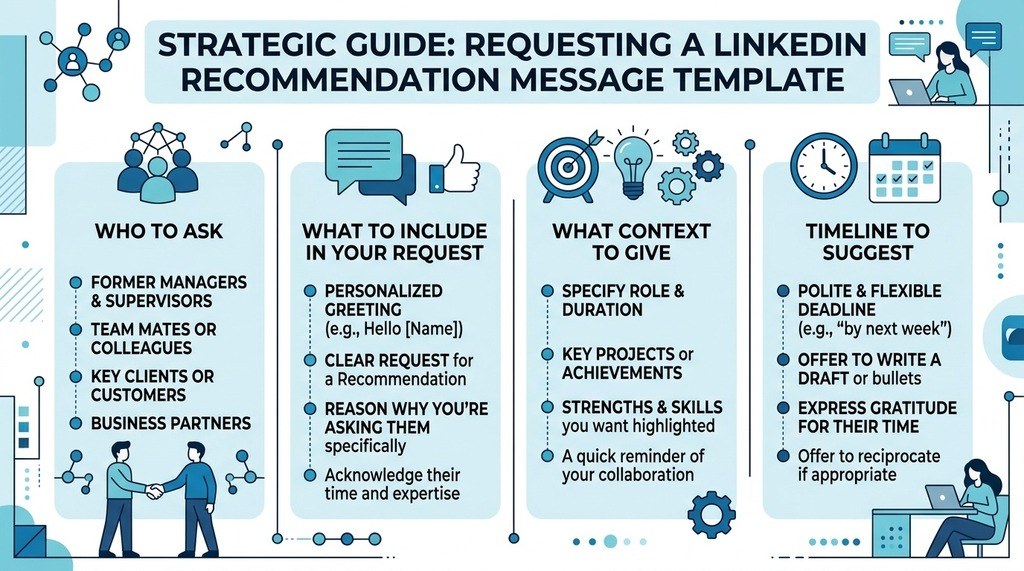
The key to receiving strong recommendations is making it easy for the recommender. Most people want to help but do not know what to write. When you ask, provide:
- The specific role or project you want them to reference
- The skills or qualities you would most like highlighted
- A brief note about what you are using the recommendation for (job search, profile strength)
- A gentle timeline: “Whenever you have 10 minutes in the next few weeks would be amazing”
Who to Ask for Recommendations
The most valuable recommendations come from:
- Direct managers who oversaw your work
- Senior stakeholders you delivered work for
- Clients or customers you served
- Colleagues who worked closely with you on major projects
Avoid asking for recommendations from people who did not directly observe your work — vague recommendations from distant contacts carry little weight.
How to Write a Compelling LinkedIn Recommendation
The best recommendations are specific, personal, and outcomes-focused. They tell a micro-story rather than listing generic attributes. Structure it as:
- Your relationship and context (how you worked together)
- One or two specific qualities or skills that stood out
- A concrete example or result that illustrates those qualities
- A strong concluding endorsement
Example of a Strong LinkedIn Recommendation
“I managed Priya for two years as our lead UX designer at FinTech Solutions, and she is simply one of the most impactful designers I have worked with in 15 years in tech. What sets Priya apart is her rare combination of deep user empathy and data-driven decision making. She redesigned our onboarding flow based on user research she initiated herself, reducing drop-off by 34% — a result that directly contributed to our Series B fundraise. Any team that brings Priya on board will feel the difference within her first 90 days.”
What Makes Recommendations Weak
- Generic praise: “She is a wonderful person and great to work with”
- No specific examples or outcomes
- Vague connection: written by someone who barely knows the person
- Too short (under 100 words) — suggests low effort or limited knowledge
Conclusion
Strong recommendations are gifts you give and receive. Invest 15 minutes writing a genuinely excellent one for a colleague and ask for the same in return. The compounding professional goodwill and career credibility they create are worth far more than the time invested.