Millions of professionals are being underpaid right now — and most of them do not know it. Salary benchmarking is the process of comparing your compensation to the market rate for your role, experience, location, and industry. Here is exactly how to do it, and what to do with the information you find.
Why Salary Benchmarking Matters
The salary gap between what you earn and what you could earn is often called the “loyalty penalty” — the cost of staying with one employer while the external market moves faster. Studies show that employees who change jobs every 2–3 years often earn 10–20% more than those who stay in the same role for many years without actively negotiating.
Factors That Determine Your Market Value
- Job title and responsibilities (not just your title — what you actually do)
- Years of experience in the role and industry
- Location (or remote-first status in global markets)
- Company size (startups, SMEs, and enterprise pay differently)
- Specific in-demand skills or certifications
- Industry vertical (finance and tech typically pay above average)
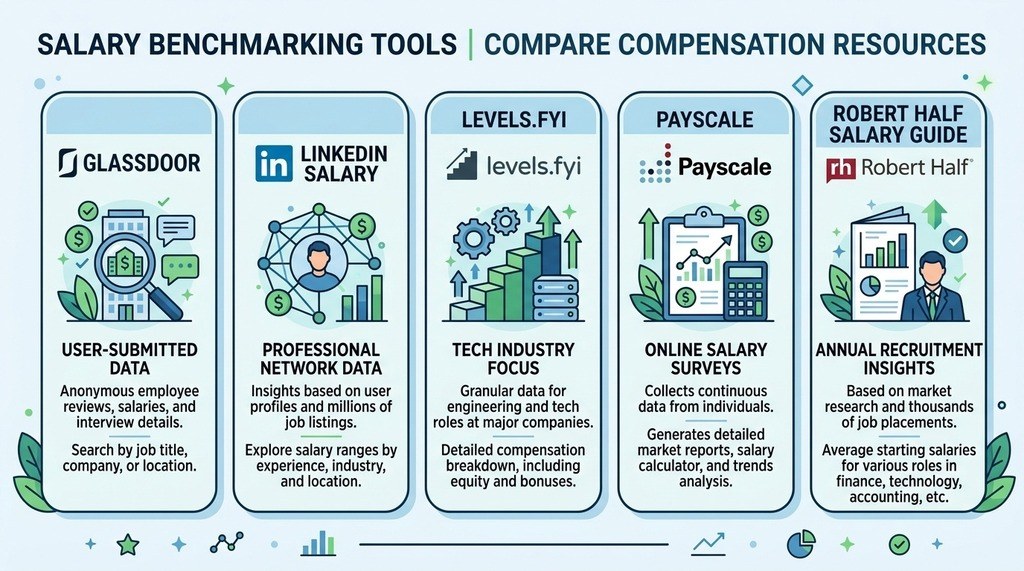
Best Salary Benchmarking Resources in 2026
- Glassdoor: Company-specific salaries reported by employees, plus reviews
- LinkedIn Salary: Role-specific data filtered by location, industry, and experience
- Levels.fyi: The gold standard for tech industry total compensation data
- Payscale: Detailed role-level salary data with experience breakdowns
- Robert Half Salary Guides: Industry-specific annual salary benchmarking reports
- Government labor statistics: Official occupational wage data by country
How to Benchmark Accurately
Do not rely on a single data source. Cross-reference at least 3 sources to get a reliable picture. Be specific:
- Filter by your exact city or region (or “remote” if applicable)
- Compare the full job description, not just the title
- Account for total compensation: base + bonus + equity + benefits
- Look at ranges, not just averages — where do you fall within the range?
What to Do If You Are Underpaid
- Build a clear case: specific market data, your achievements, your impact
- Choose the right timing (performance review, after a win)
- Have a direct conversation with your manager
- Know your walk-away number — be ready to consider the external market if the response is inadequate
The Value of the External Market
Sometimes the fastest way to a market-rate salary is an external job offer — either to take it, or to use it as negotiating leverage internally. In 2026, many professionals find they are offered significantly more by new employers than by their current one. Knowing this is your right, and acting on it is smart career management.
Conclusion
You cannot negotiate from ignorance. Salary benchmarking arms you with the data you need to advocate for fair compensation — or to decide it is time to look elsewhere. Run a full benchmark at least once a year. The information is free. The financial impact of acting on it is not.