Public speaking is consistently rated as one of the most feared activities in the world — ranked above death by many survey respondents. Yet it is also one of the highest-return career skills you can develop. The ability to present ideas clearly and confidently in front of others is a direct accelerator for promotion, influence, and professional reputation. Here is how to develop it.
Why Public Speaking Matters for Your Career
Every significant career opportunity eventually requires you to speak in front of others: presenting to leadership, pitching in a meeting, speaking at a conference, or leading a team. The professionals who advance fastest are almost always those who communicate clearly under pressure. As billionaire investor Warren Buffett has noted, strong communication skills can add 50% to a professional’s value.
The Root Causes of Speaking Anxiety
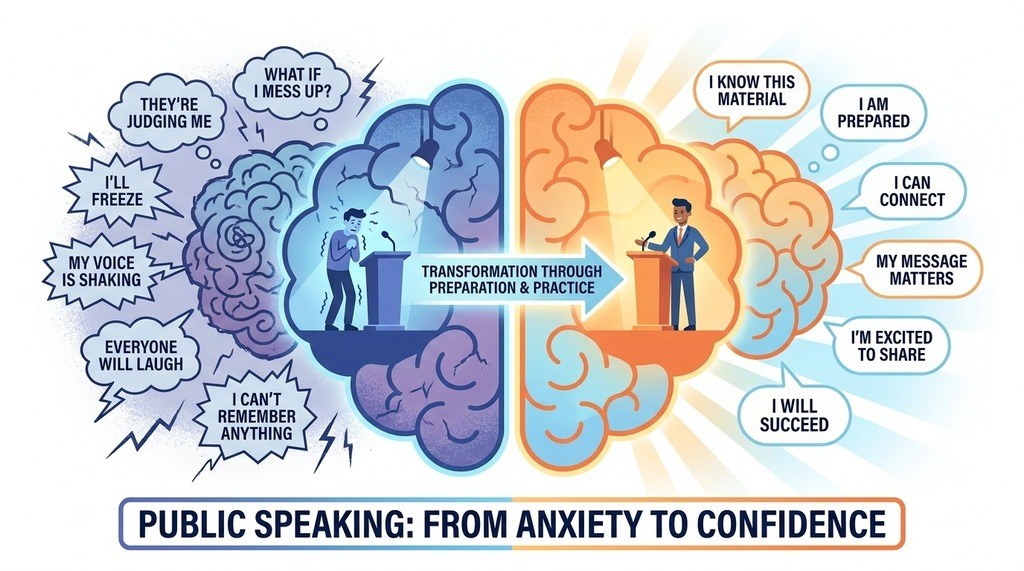
Speaking anxiety is universal — even experienced speakers feel it. The physiological response (racing heart, dry mouth, shaky voice) is the same adrenaline response as exercise. Understanding it is normal — and that the audience is almost never as aware of it as you feel — removes much of its power.
Preparation: The Foundation of Confidence
Most speaking anxiety comes from insufficient preparation. You do not need to memorize a script — but you do need to know your material cold. Prepare using the following structure:
- Opening: A hook — a question, story, statistic, or bold statement that grabs attention
- Three key points: The core of what you want to convey (audiences remember three things)
- Conclusion: Return to your opening theme and end with a clear call to action or takeaway
Practice Techniques That Work
- Record yourself: Video recordings reveal habits you are unaware of (filler words, pacing, posture)
- Practice aloud — not in your head: Mental rehearsal does not prepare your voice and body the way speaking aloud does
- Join Toastmasters: The global public speaking organization offers structured practice in a low-stakes environment
- Seek small stages: Start with team meetings, internal presentations, and webinars before major conferences
Delivery Techniques for Impact
- Pause deliberately: Silence is powerful. Pause after key points — do not fill silence with “um” or “er”
- Vary your pace and volume: Monotone delivery loses audiences quickly. Speed up for excitement, slow down for emphasis
- Make eye contact: Hold eye contact with individuals for 2–3 seconds, not darting glances
- Move with purpose: Deliberate movement adds energy. Random fidgeting distracts.
- Tell stories: Data informs; stories move people. Anchor every key point in a concrete human example

Handling Questions and Difficult Moments
- If you do not know an answer: “That is a great question. I do not have the data in front of me, but I will follow up with you directly after this.”
- If you lose your place: Pause, take a breath, glance at your notes. Audiences interpret composure under pressure as confidence.
- If technology fails: Have a plan B. Know your content well enough to present without slides.
Conclusion
Public speaking confidence is built through progressive exposure, not born. Start with small audiences, record and review your performance, join a group like Toastmasters, and say yes to every speaking opportunity available to you. Each one is easier than the last — and each one builds the reputation of a professional others pay attention to when they speak.