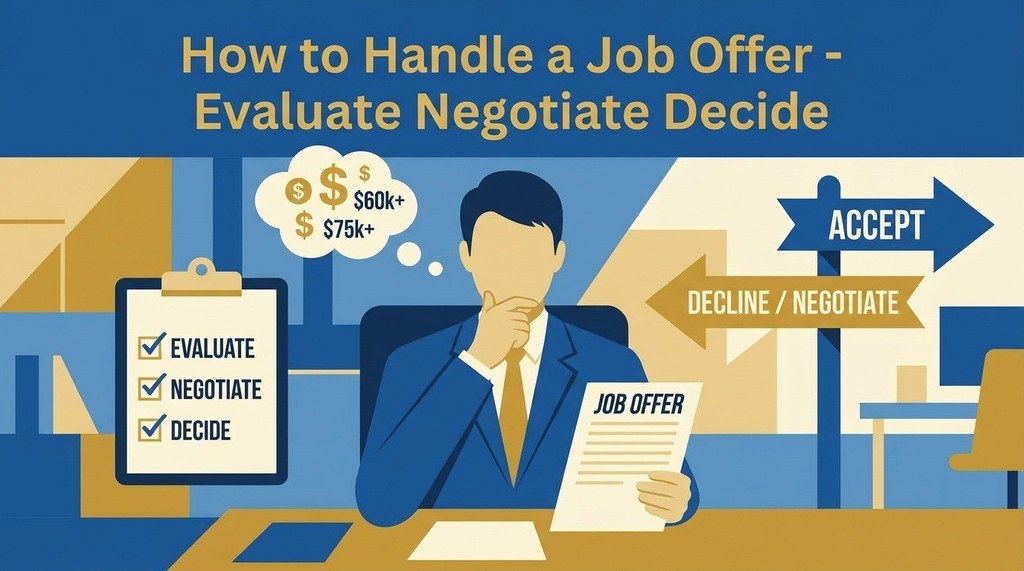
Receiving a job offer is exhilarating — but it is also a critical decision point that many people rush through. The moment between receiving an offer and accepting or declining it is one of the most important in your career. Here is how to handle it professionally, evaluate it thoroughly, and negotiate confidently.
Step 1: Do Not Accept Immediately
When you receive a verbal offer, your first response should be enthusiastic gratitude — and a request for time to review. “Thank you so much — I am really excited about this opportunity. Could I have a few days to review the offer details in writing before formally accepting?” This is entirely professional and expected.
Standard response times: 24–48 hours for junior roles, 3–5 business days for senior roles. Never feel pressured to accept on the call.
Step 2: Evaluate the Full Package
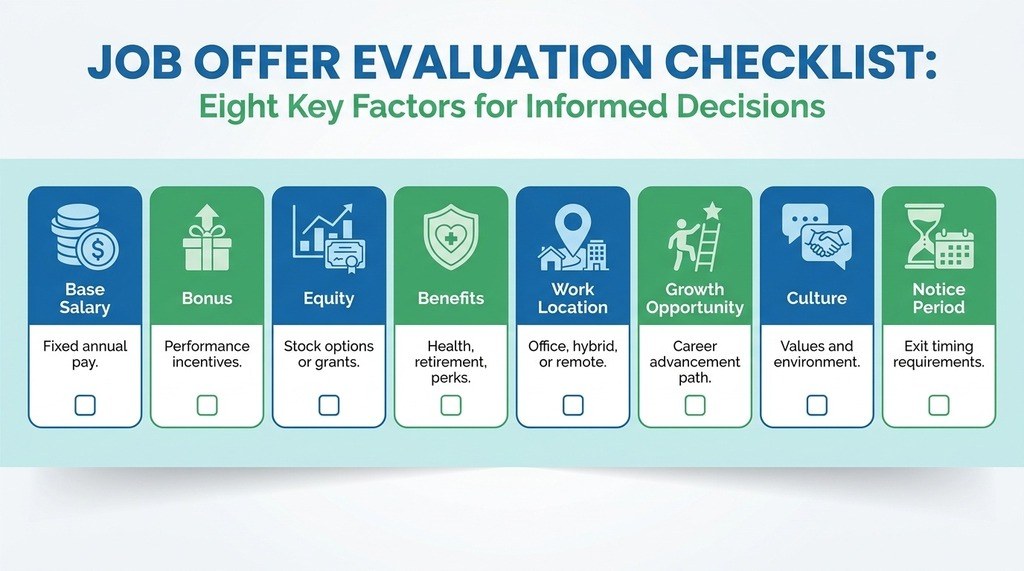
A job offer is much more than base salary. Evaluate every component:
- Base salary: Compare to market benchmarks (Glassdoor, LinkedIn Salary, Levels.fyi)
- Bonus: Guaranteed vs discretionary? What is the typical payout?
- Equity / Stock options: What is the vesting schedule? What is the realistic value?
- Benefits: Health insurance, dental, pension/401k employer match, life insurance
- Paid time off: Annual leave allowance, sick days, public holidays
- Remote work policy: Fully remote? Hybrid? Required in-office days?
- Professional development: Learning budget, conference attendance, certification sponsorship
- Growth: Clear career path? Performance review frequency?
Step 3: Negotiate
Most offers have room to move — particularly on base salary, signing bonus, and equity. The fact that an offer has been extended means the company wants you. A respectful negotiation rarely results in an offer being withdrawn.
How to counter: “I am genuinely excited about this role and the company. Based on my research and experience, I was hoping the base salary could be closer to [target]. Is there flexibility there?”
If base salary is fixed: negotiate a signing bonus, additional vacation days, or an earlier performance review date.
Step 4: Consider Non-Financial Factors
Salary is important — but research consistently shows it is not the primary driver of long-term job satisfaction. Equally important factors:
- Your direct manager — their quality will define your daily experience
- Team culture and the colleagues you will work alongside
- Meaningful work that aligns with your values
- Growth and learning opportunities
- Company stability and future prospects
Step 5: Make a Clear Decision
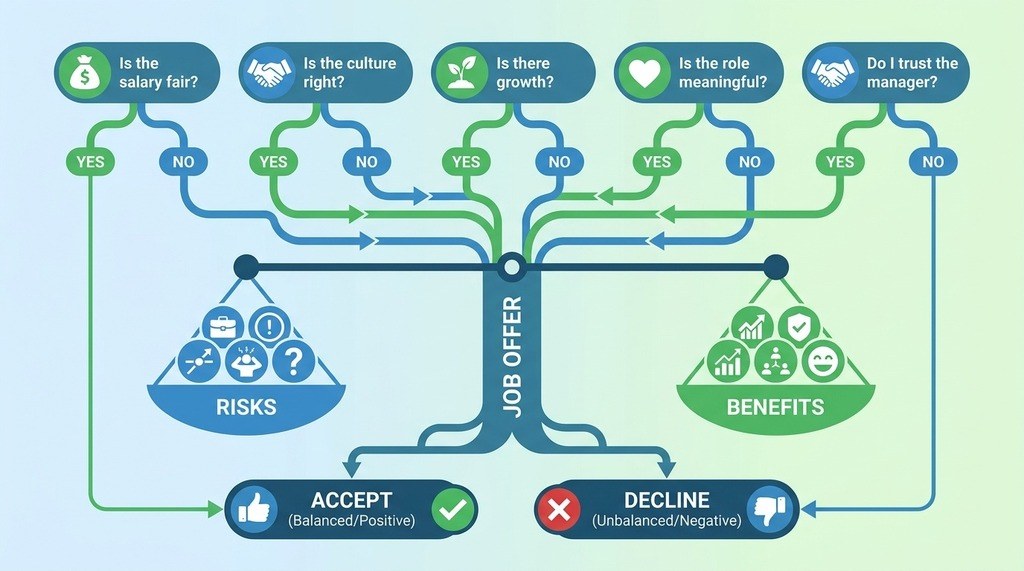
- Accepting: Express genuine enthusiasm, confirm start date and next steps in writing
- Declining: Be gracious and brief: “After careful consideration, I have decided to pursue a different opportunity. I have a great deal of respect for [company] and hope our paths cross again.”
Conclusion
A job offer deserves careful consideration, not a snap decision driven by excitement or anxiety. Take the time you need, evaluate the complete package, negotiate confidently, and decide with clarity. The right offer is one you accept with genuine enthusiasm — not one you regret three months in.